Jenny Greenteeth: The Terrifying Water Hag of English Folklore
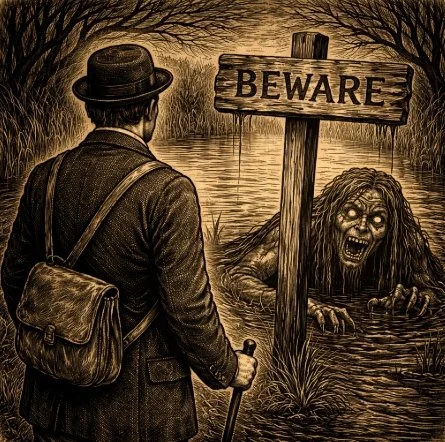
Jenny Greenteeth. Traveller Beware…
Travel – if you dare – to the north-west of England, and you will find yourself in the county of Lancashire, an area dissected by three rivers: the Lune, the Wyre, and the Ribble, all of which wend their way westward before flowing into the storm-tossed Irish Sea. Naturally, these rivers branch into smaller tributaries and streams, until the whole region is veined with waterways.
These waters can be calming to behold, and a traveller might be tempted to rest upon their banks, listening to their gentle murmur. However, any rambler who chooses to do so should beware, for something sinister is said to lurk within their murky depths - a water-dwelling hag known as Jenny Greenteeth.
Jenny Greenteeth, also known as Wicked Jenny, Ginny Greenteeth, or Grinteeth, is a figure of English folklore. Tales of her are fairly widespread; she is also whispered of in North Staffordshire, as well as in Cheshire and Shropshire (Wendlelow country ;-)). Here, she is known by similar names, including Wicked Jenny, Ginny Greenteeth, and Jeannie Greenteeth.
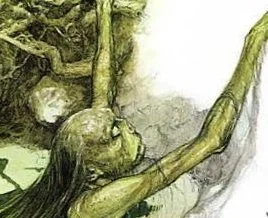
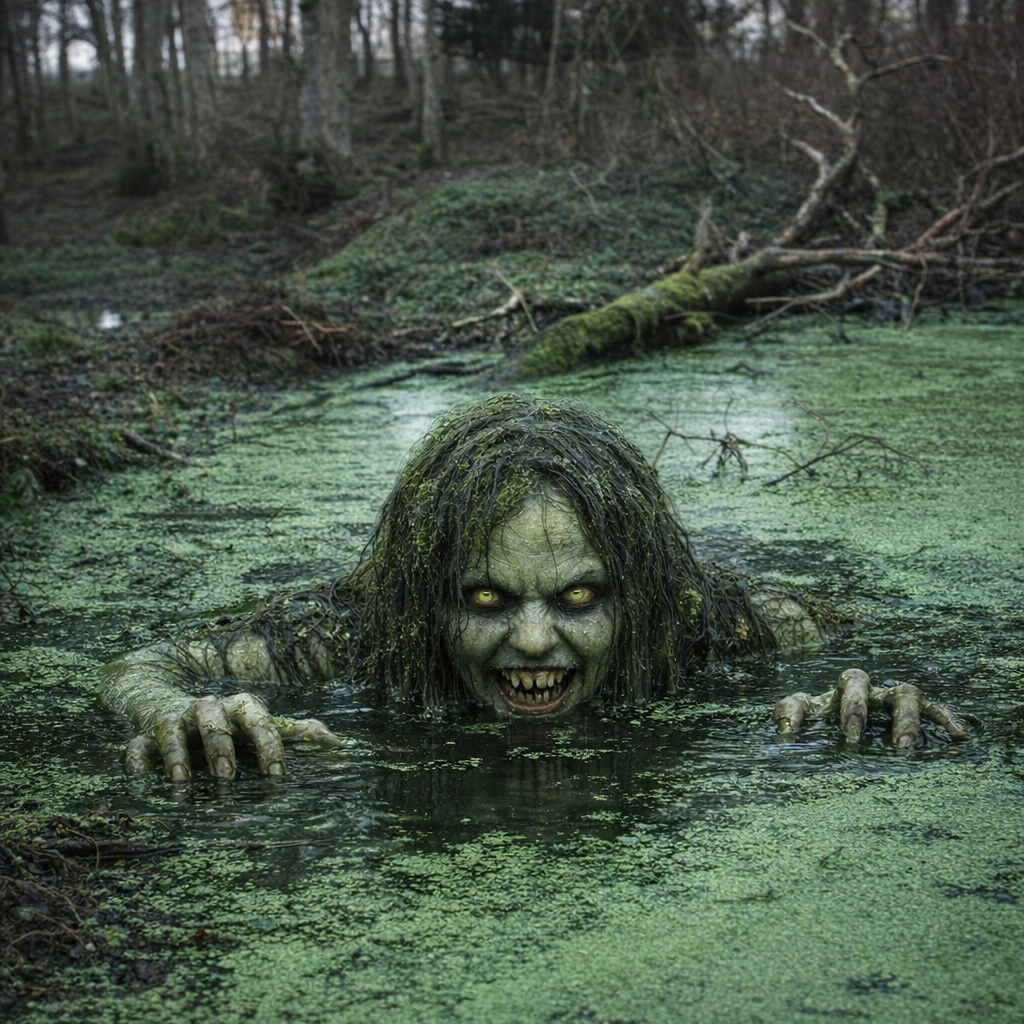
She is described as green-skinned, her teeth and gums caked in algae, with long, sharp teeth and fingers ending in cruel, claw-like nails - more akin to the talons of a raptor than the hands of a woman. No one is entirely safe from her predations, but the young and the elderly are said to be particularly at risk, as she favours easy prey.
In some accounts, she is believed to lurk in the branches of trees at night, watching her victims and preparing to drop upon the unsuspecting. If they are fortunate, they may receive a warning, as fetid droplets of water fall from above. Some historians suggest this image may have been confused by folklorists with the northern English Jinny-hewlet, an old folk name for an owl.
Folklorist Roy Palmer, in Folklore of Herefordshire and the Welsh Border (2009), records the following Staffordshire saying:
“Jenny wi’ green teeth lives i’ th’ pool-
she’ll have thee if tha leans too far.”
In their excellent book The Lore of the Land (2005), Jennifer Westwood and Jacqueline Simpson record the following northern oral tradition:
“Tha’d best keep away fro’ th’ cut, or Jenny Greenteeth’ll get thee-
she sits under th’ weeds, waitin’, an’ she’ll grip thi ankles an’ drag thee down.”
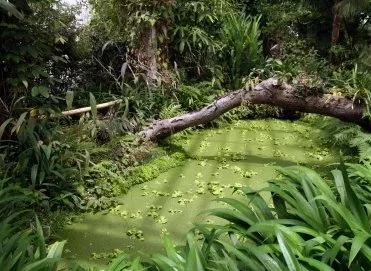
It seems Jenny Greenteeth serves as a cautionary tale - much like the Scottish Blue Men of the Minch or the Slavic Rusalka - used to warn children of the dangers of water, particularly ponds covered in duckweed, which may conceal hidden depths and hazards.
Indeed, the idea of a frightening being dwelling in water is found worldwide and is almost always used to deter adventurous youngsters from venturing where they ought not. In Australia, there is the Bunyip; in Jamaican folklore, the River Mumma (River Mother). In American folklore, we encounter the Storm Hag of Lake Erie in Pennsylvania, a creature said to lurk beneath the waters and blamed for shipwrecks in the region. Like Jenny Greenteeth, the Storm Hag is often described as a green-skinned woman with sharp, unnatural teeth and piercing eyes.
The similarities between Old Jenny Greenteeth and the Storm Hag are striking, and one is left to wonder, brave reader, whether they might be one and the same - an old English tradition carried across the Atlantic by immigrants, finding a new home and continuing to terrorise distant shores.
Thank you for taking the time to read my blog. I hope you have enjoyed this piece of English folklore.
If you enjoy my work, please consider picking up a copy of Threads of Shadow or Fireside Horror - folkloric horror collections told through short stories set in the troubled Shropshire town of Wendlelow, available on Amazon stores worldwide. Links to the UK and US editions are below.
Until next week -
Stay spooky.
Sources
Wikipedia
The Lore of the Land (2005) – Jennifer Westwood and Jacqueline Simpson
Folklore of Herefordshire and the Welsh Border (2009) – Roy Palmer