Know Your Goblins – The Trow
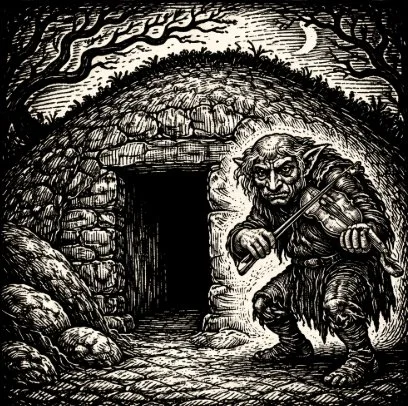
The Dreaded Trow. Fiddle players beware…
Once more a voice calls out, ‘Know your goblins.’ I cannot see the individual who cried these words, but I suspect they are a very sensible person, with a good head on their shoulders. As I have previously stated, goblin awareness is a vital life skill, and so I pull out my dusty books, settle down in a dim corner of the room, and prepare to research and deliver this essential information.
Today we head to the far north of Scotland, to the Orkney and Shetland Islands, to trace that most dangerous of goblinkind: the Trow.
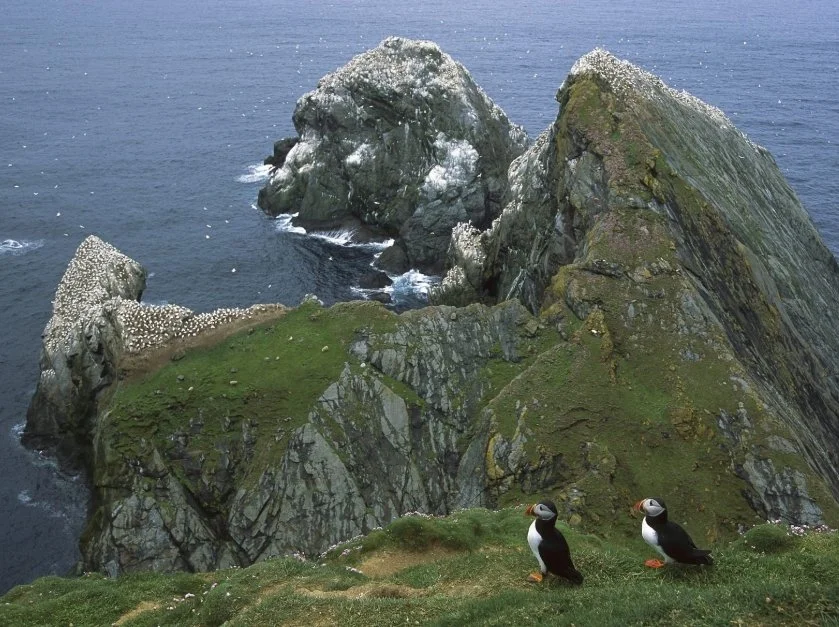
Life on the Scottish isles can be harsh. Stormy winds batter the small settlements that cling there, and wind-tossed seas make journeys to the mainland a challenge. The folk of these islands are a hardy breed; the goblins that haunt them, even more so.
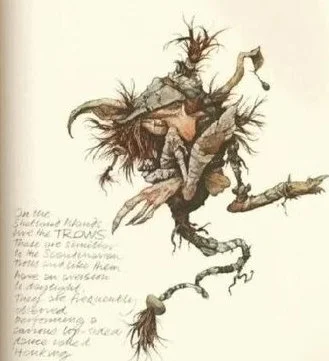
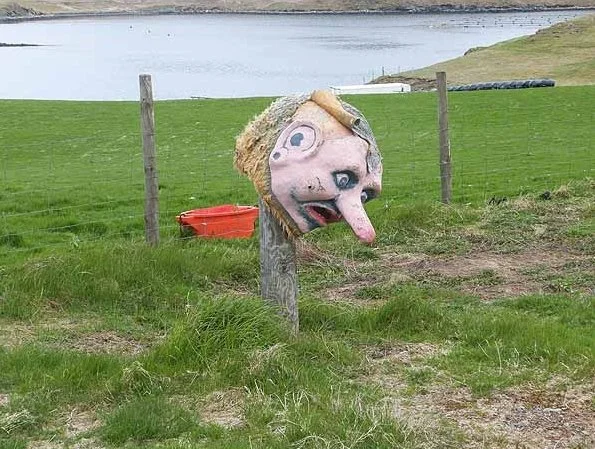
A Trow (also referred to as trowe, drow, or dtrow) is a malignant fairy or goblin. They are usually described as short, stunted, and ugly, though there are occasional tales of giant, multi-headed trows terrorising whole communities.
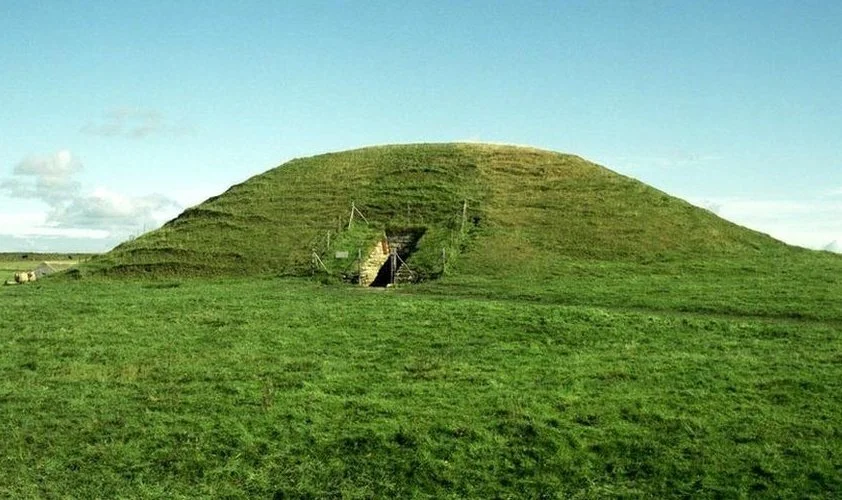
A large number of the ancient mounds located on the islands are thought to be ‘trowie knowes’ (earthen mound dwellings), where they hide from the light of day, venturing out only after dusk. Indeed, if caught in sunlight, they cannot return home until the following evening.
Local folk would avoid these old monuments, particularly after dark, for fear of a nocturnal encounter. Trows are known to have a fondness for music, particularly the fiddle, and are notorious for abducting musicians in the night and imprisoning them within their mounds, so those of you who are musically gifted and can play a violin beware…
The name Trow (or Drow) is thought to derive from an Old Norse dialect, as these isles were once occupied by Norse settlers before the Scots drove them out. The word may stem from draugr, meaning revenant, devil, or troll.
It was considered unfortunate to speak of Trows, and even more unlucky to lay eyes upon one of the blighters - particularly if you happen to play an instrument requiring a bow. There were believed to be two distinct kinds of Trow: the hill-trows and the sea-trows, said to be mortal enemies. We have already spoken of the hill-trow; now let us turn our attention to its ocean-loving cousin.
Descriptions of sea-trows vary, but they are often said to resemble a colt with matted hair. However, the Orkney variety is thought to be among the most unpleasant imaginable: a scaly creature with matted hair, a monkey-like face, and a sloping head. It was said to be frail-bodied, yet possessed disproportionately large limbs, with disc-shaped feet - “round as a millstone” - and webbed hands and feet, giving it a slow, lumbering, almost “wabbling” gait.
Finally, and with great regret, we must speak of the Kunal Trow, or King Trow - perhaps the worst of the lot - said to dwell on the island of Unst in Shetland. They are a race without females, wandering the darkness and weeping with loneliness. They take human wives, but tragically these women never survive the birth of Trow–human offspring, forcing the Kunal Trow to abduct unwilling women to act as wet nurses for their young.
Some of the traditional tunes of the Shetland Islands are believed to have come from the Trows. A wandering musician might hear one of these troublesome beings playing a strange melody and later reproduce it. Such alleged Trowie tunes include “Da Trowie Burn”, “Da Trow’s Reel”, and “Da Peerie Hoose in Under Da Hill” (“The Little House Under the Hill”).
I hope this blog has been useful, particularly to any of my violin-playing readers. Remember, these goblins are out there - and they are a blooming nuisance.
If you enjoy what I do, please consider picking up a copy of either of my books, Threads of Shadow or Fireside Horror, terrifying folk-horror collections told through short stories — available on all Amazon stores, I have enclosed link to the UK & US versions below.
Until next week,
Stay spooky.