Book Update - Return of the Shadow

Look out behind you….
Great news, my friends. My editor, Carson Buckingham, returned Threads of Shadow to me last week. I’m currently hard at work slogging through the edits, but the end is in sight. A huge thank you to Carson for all her hard work and patience. Hopefully, everything should be ready to send to review readers in a couple of weeks, and I can have the book ready for its audio reading at the same time. Until then, it’s going to be a few late nights and early mornings for me whilst I get everything ready.
If you have not already done so, now is a great time for a scary treat - so pick up a copy of my book Fireside Horror to immerse yourself in the first part of The Wendlelow Mysteries. It is available on Audible and Amazon - click on the Shop in the menu above for more information.
More updates to follow.
Until then, stay spooky.
Irish Folklore - The Werewolves of Ossory.

And ‘Little Red Riding Hood’ thought she had it bad.
The medieval kingdom of Osraige, anglicised as Ossory, was located in the south-east of Ireland, in what is now part of County Kilkenny and western County Laois. It was controlled by the Osraige tribe, whose name means ‘people of the deer’. The kingdom declined during the Norman invasion in the 12th century.
Despite their name, the Osraige had more of a wolf-like reputation. Their warriors were tough, brave men who were known to go wolfing (raiding) in neighbouring lands. The stories tell of the raiders adopting lupine hairstyles and wearing wolfskin clothes during such excursions, further adding to their victims’ terror, and perhaps creating the bedrock for a famous Irish myth: the Werewolves of Ossory.


Though now extinct, wolves were once a real threat in Ireland. There is even a story of a wolf pack attacking the town of Coleraine in the 17th century. The Irish bred wolfhounds - huge dogs that could reach a man’s shoulder - in order to hunt these beasts, and there are even stories of some Irish warriors taking wolves to war with them. In short, the wolf had a reputation for violence and savagery.
The medieval Irish work Cóir Anmann (Fitness of Names) gave details of a terrifying warrior-werewolf called Laignech Fáelad. He was said to be the ancestor of a tribe of werewolves who were descended from the kings of Ossory. The text says:
He was a man that used to go wolfing, i.e. into wolf-shapes, i.e. into shapes of wolves he used to go, and his offspring used to go after him and they used to kill the herds after the fashion of wolves, so that it is for that that he used to be called Laignech Fáelad, for he was the first of them who went into a wolf-shape.
The Book of Ballymote, written in the 14th century, speaks of this tradition, claiming that "the descendants of the wolf" in Ossory had the power to change themselves and go forth to devour people. It is possible to imagine the fear of those who lived in the realms bordering Ossory, huddled round their fire in their small homes. They might hear a howl on the night wind - was it wolves? Would your wooden door be able to hold them back? Or just perhaps, was it something even worse - something more diabolic and warlike?
Finally, one famous tale is told by Gerald of Wales. In it, a young priest is wandering in southern Ireland when he encounters a dying wolf - who is actually an old woman. She claims that she and her husband came from the kingdom of Ossory, and had been cursed to spend seven years in the form of wolves. Feeling pity for the woman, and at the requested of her distraught husband, he agrees to offer her the last rights.
Thank you for taking the time to read this blog, my friend. If you enjoy stories of ghosts, monsters, and the uncanny, please consider supporting me by purchasing a copy of my book Fireside Horror - a novel told in short stories, each one certain to send a shiver down your spine. Available on Amazon and Audible. Link below.
Until next time, stay spooky.
Ghostly Folklore – The Ghostly Piper of Duntrune Castle.

The Piper plays his sad Dirge.
There can be few more stirring images than that of the lonely phantom piper, his haunting tunes drifting over a foggy Scottish loch on a cold winter’s evening.
Duntrune Castle is located in the West of Scotland. Originally built in the 13th century by the MacDougall clan, it was eventually taken by Clan Campbell and remained their seat until the 18th century. Sitting on the northern banks of Loch Crinan, it is a romantic site – the perfect setting for a ghostly tale.
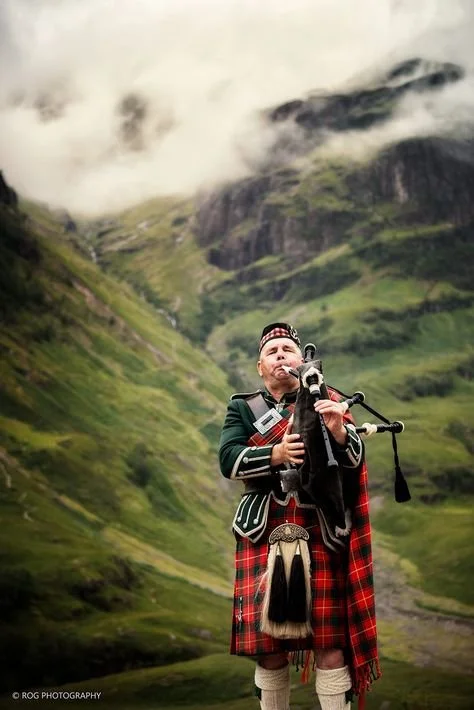


There are a couple of variations regarding the origins its ghost, but the one told to me runs thus:
In 1644, Duntrune was captured by Clan Campbell while the leader of the MacDonald clan, Alasdair MacColla, was away with the majority of his warband. Alasdair was a shrewd man and had dispatched his piper to the castle to act as a spy. Unfortunately, he was discovered. Now, bagpipers were privileged members of a clan, being educated and widely travelled. As such, they were protected from harm during times of war. Thus, MacColla’s piper was not killed, but instead imprisoned.
When MacColla returned to Duntrune, he sailed up the loch, determined to reclaim his home from his bitter enemy. The piper, realising his master was outnumbered, played a tune called Piobaireachd-dhomh-naomhadh, or in English, The Piper’s Warning to His Master. Upon hearing the haunting notes drifting over the loch’s dark waters, Alasdair MacColla sadly turned his ship away.
Angered by the piper’s actions, the Campbells enacted a cruel punishment: they cut off the brave man’s hands so he would never play the bagpipes again. Unable to stop the flow of blood, the piper soon died.
Over the years, many people have claimed to encounter unusual phenomena within Duntrune’s ancient walls – strange shadows passing through empty hallways, objects moving without cause. But still, there were unbelievers – people who thought the tale nothing more than a colourful myth.
Then, in 1888, repairs were made to the castle, and incredibly, workers unearthed a skull beneath the first floor. Digging further, they found the skeletal remains of a man. With great care, they removed the skull, torso, legs, feet, and arms – and made a remarkable discovery: there were no hands. The piper’s remains were given a Christian burial in an unmarked grave in Kilmartin churchyard, where they remain to this day.
And so, you might stand on the banks of Loch Crinan as night casts its veil over the land and look out over its waters towards Duntrune. There, standing upon one of the parapets, you may see a lonely figure facing the sea, playing on his bagpipes. And if you listen very carefully, you may just hear the notes of Piobaireachd-dhomh-naomhadh carried on the breeze.
Thank you for taking the time to read this blog, my friends. I’ve attached a YouTube link to a video of the talented Faye Henderson playing The Piper’s Warning to His Master. So grab a whisky, settle down, and enjoy. Until next time – stay spooky.
Folklore - The Yorkshire Revenant.

A Revenant stalks the land…
A revenant is a very particular kind of undead and can be imagined as a kind of medieval zombie. They are usually associated with remote, out-of-the-way villages, where they would terrorise the local population. The name revenant comes from the Old French word revenant, meaning “returning.”
A revenant would often possess a set of characteristic features, which included corporeal (physical) bodies - very often bloated or rotting. They were harbingers of plague; like modern zombies, revenants were thought to spread disease. They were believed to have been sinners during their lives or to possess unshriven souls. In most cases, it was thought that the only way to lay these fiends to rest was to exhume the body and either burn or behead it.


William of Newburgh was a 12th-century historian and chronicler, and one of our best sources for medieval revenant stories. He came from Bridlington in Yorkshire, in England’s northeast.
William told the story of a “man of evil conduct” who fled York to avoid justice. He later married, but being a distrustful fellow, he concealed himself in the rafters of his home, hoping to catch his wife in the act of infidelity. However, he accidentally fell from his perch and died of his injuries a few days later. William goes on to say:
A Christian burial, indeed, he received, though unworthy of it; but it did not much benefit him: for issuing, by the handiwork of Satan, from his grave at night-time, and pursued by a pack of dogs with horrible barkings, he wandered through the courts and around the houses while all men made fast their doors, and did not dare to go abroad on any errand whatever from the beginning of the night until the sunrise, for fear of meeting and being beaten black and blue by this vagrant monster.
It seems this ghastly being was held responsible for the deaths of some local people, and so a group of stout hearted young men:
Snatching up a spade of but indifferent sharpness of edge, and hastening to the cemetery, began to dig; and whilst they were thinking that they would have to dig to a greater depth, they suddenly, before much of the earth had been removed, laid bare the corpse, swollen to an enormous corpulence, with its countenance beyond measure turgid and suffused with blood; while the napkin in which it had been wrapped appeared nearly torn to pieces. The young men, however, spurred on by wrath, feared not, and inflicted a wound upon the senseless carcass, out of which incontinently flowed such a stream of blood, that it might have been taken for a leech filled with the blood of many persons. Then, dragging it beyond the village, they speedily constructed a funeral pile; and upon one of them saying that the pestilential body would not burn unless its heart were torn out, the other laid open its side by repeated blows of the blunted spade, and, thrusting in his hand, dragged out the accursed heart. This being torn piecemeal, and the body now consigned to the flames...
Thank you for taking the time to read this blog, my friend. If you enjoy stories of ghosts, monsters, and the uncanny, please consider supporting me by purchasing a copy of my book Fireside Horror - a novel told in short stories, each one certain to send a shiver down your spine. Available on Amazon and Audible. Link below.
Until next time, stay spooky
Book Update - Character Dive - Doctor Benedict Mogfadian

Doctor Benedict Mogfadian.
Doctor Benedict Mogfadian is a somewhat mysterious individual. A self-styled magician, he is the employer of the main protagonist, Casper Trenchton. Though he currently spends most of his time at his house in Wendlelow, he also owns a rather grand home in the Cotswolds called Puddlebury Hall.
A somewhat eccentric individual, the doctor likes to wear a top hat, dark clothing, and a short cape. He always carries a mysterious blackthorn cane with him when he is out and about.
He lives with his niece, Julie, who assists him in his laboratory, where he brews concoctions that he refers to as “potions.”
As Threads of Shadow nears its publication date, now is a great time to delve into the mysteries and horrors of Wendlelow by picking up the first book in the sequence: Fireside Horror.
If you enjoy stories of ghosts, monsters, witchcraft, and prehistoric devils, I’m sure you’ll get a kick out of it.
Irish Folklore - The Monstrous Dobhar-chú

Ireland has a great many monsters haunting its mist shrouded shores, but few are as dangerous as the man-eating Dobhar-chú. A terrifying beastie said to occupy the lakes, and rivers throughout Ireland. The name Dobhar-chú (pronounced do-war coo) translates to Water Hound, though it is sometimes called The King Otter, and is described as part otter, part dog.
Those people who have survived an encounter with this monster tell of a thing about five times the size of a regular otter - nearly 5 meters long - with a white pelt, black tips on its ears, and a dark cross on its back. Some varieties, that dwell in murkier, peat stained waters are said to have darker fur. There are few written accounts of the Dobhar-chú, most of the stories about it have been passed down through oral tradition.


Killing a Dobhar-chú is extremely hard, they live in mating pairs, which often attack together, and are as swift on land as they are in the water. As if this were not bad enough, whoever kills the beast will find themselves cursed, and doomed to die within twenty four hours. Anyone stumbling across the scene of all this slaughter could find themselves in possession of the creature’s pelt which is thought to have magical properties.
The Legend of the Headstone
A church yard in County Leitrim, in the north of Ireland, contains a headstone (picture in gallery above) with a gruesome tale attached to it.
In the year 1722 Grace McGloighlin known locally by her maiden name Grace Connolly, lived in the town of Creevelea, near to Glenade Lough (Lake.) One afternoon she went down to the lough to wash some clothes. When she failed to return that evening her husband, Terrance, went looking for her and discovered her mutilated body by the water, a Dobhar-chú sleeping on top of her. He ran home, collected his knife, and crept up on the beast, slaying it. As the thing died it let out a whistling yell to its mate, who soon rose from the lough, and chased after poor Terrance. In desperation he sought the aid of a friend, and fortifying a local farm house, they fought and eventually killed the second beast.
More Sightings
On 1st May 1968, two local men spotted a Dobhar-chú swimming in Loch Sraheen on Achill Island, they wisely left the area before it spotted them.
British folklorist Dr Katherine Briggs, also found a reported sighting of a Dobhar-chú at Dhu-Hill. Witnesses said it was accompanied by a host of normal otters.
In 2000, Irish artist Sean Corcoran claimed to have seen a Dobhar Chu in a lake on Omey Island in Connemara, County Galway. Corcoran describes it as large, dark, and with orange flippers, it swam the width of the lake from west to east, finally leaping onto a huge boulder before disappearing with a haunting screech. He drew a picture of his sighting, which can be seen in the gallery above.
Thank you for taking the time to read this blog my friend. If you enjoy stories of ghosts, monsters, and the uncanny, please consider supporting me by purchasing a copy of my book ‘Fireside Horror,’ a novel told in short stories, it is currently available from Audible, narrated by the wonderfully talented Aubrey Parsons, who does a marvellous job of bringing the stories and characters to life. Links Below.
Until next time, stay spooky.
Book Update - Character Dive - Julie Mogfadian

Julie Mogfadian
Julie is the niece of Doctor Mogfadian. She likes to wear a Bretton Fiddlers Cap - as she thinks it irks her somewhat stifling uncle – and has many boyish affectations. She is intelligent, if not a little naïve and helps the Doctor with some of his more esoteric tasks, as well as running a small antiques shop close to Wendlelow’s market. She is a member of a local Folklore Society, run by the universities head librarian Nolan Perkins.
With such a strange uncle, and living in a town plagued by sinister forces, it was only a matter of time before she was forced to confront the terrors that dwell in the darkness.
As Threads of Shadow nears its publication date, now is a great time to delve into the mysteries and horrors of Wendlelow by purchasing the first book in the sequence. ‘Fireside Horror.’ If you enjoy stories of ghosts, monsters, witchcraft and prehistoric devils, your are sure to get a kick out of it.
Folklore - The Simonside Dwarves.
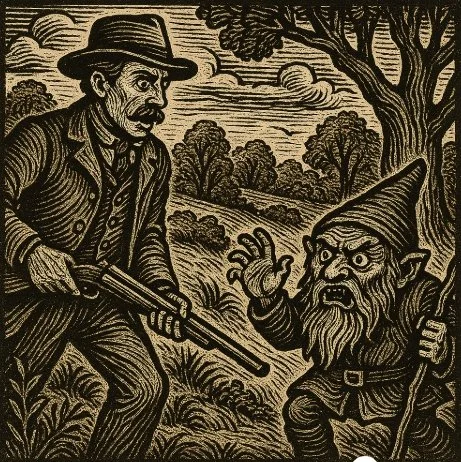
A Duergar, he is not happy…
In Northumberland, in England’s North East, not far from the market town of Rothbury can be found the Simonside Hills, an area of highland that stands about 300 to 400 meters (980–1,310 feet) above sea level. Tossun Hill is the highest point in the area at nearly 440 meters (1,444 ft).
The origin of the name ‘Simonside’ is much speculated on, one 13th Century document refers to the hills as Simundessete. The name may be a corruption of Sigemund's seat, Sigemeund being an old Germanic hero from ‘The Song of the Nibelungs’ an epic poem written around 1200 AD in Middle High German. An alternative explanation for the name is a corruption of "seaman's sight", as it is alleged that they are visible from the North Sea.

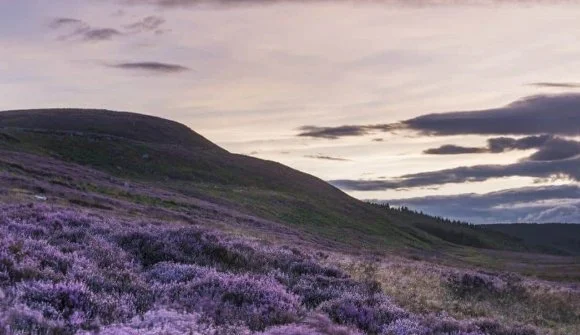
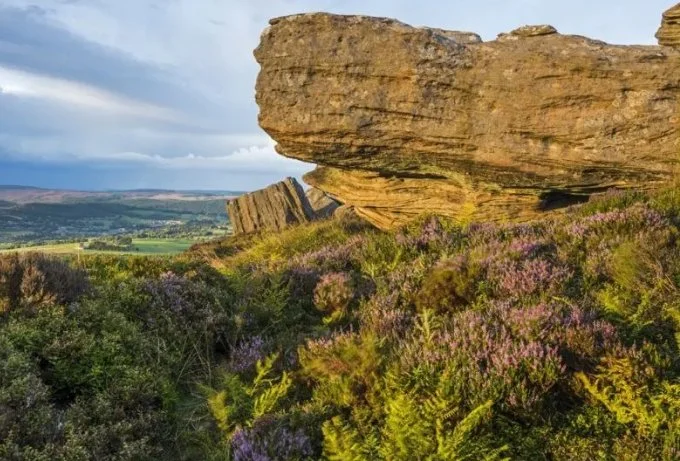
Whatever the truth of the names origins it is undoubtedly a dangerous area, with precipices and bogs ready to claim the life of any traveller and, as if this were not bad enough, the unwary rambler must also contend with a supernatural threat, that of the Simonside Dwarves.
The Simonside Dwarves, also referred to as the Duergar are a mythical race from English folklore, said to dwell in the hills. Malevolent beings, it is thought they emerge at dusk, using lighted torches to led solitary wanderers off the path and into dangerous locations.
Accounts
One account tells of a traveller who, seeking refuge from the bitter night wind, found a small hut with a fire within. He was joined by a grumpy, diminutive figure, who sat with him in silence, although nervous, the exhausted man was eventually able to find sleep, but when he awoke at dawn he discovered both the hut and the figure had vanished, leaving him alone and perilously close to a cliff's edge.
Another tale describes a man who went searching for the little fellows. As he wandered the moors it became dark and he called out for a light, much to his surprise one appeared on a distant rise, he moved towards it, but then remembering how dangerous it was to follow such enchanted globes. He tossed a clod of earth into a bog, causing a splash. The light went out.
Happy to have deceived the dwarves he called out, mocking them (very unwise) in a moment he found himself surround by a group of mean looking Duergar, all carrying clubs, he fainted in shock. When he woke the dwarves had gone, and badly shaken, he made his way home.
In a third story two men had been out hunting in the hills, they stopped to eat by the shelter of a rock. They recounted being approached by a short man dressed in clothes the colour of bracken. He asked them if they knew who he was, to which they replied “the Lord of the Manor”, and offered to hand over the birds they’d shot that morning. The dwarf declined, claiming to be a vegetarian, and invited the two men to join him at his home for a meal. Wisely, and politely, they refused, and quickly headed back to Rothbury where they recounted their tale at a local tavern, The Landlord praised their decision not to accompany the little man. After all, the Simonside dwarves enjoyed.luring humans into their lairs, where they would murder and then devoured them.
One local man from Thropton recalled that as a boy in the late 1950s, and early 1960s he was often told not to cross to the Simonside of the river after dark because the little people might come down by Little Tosson and get him. He always put this down to stopping him wandering too far, but as he grew older he started to wonder… He was also told of people dancing in the dark in strange ceremonies.
Finally another witness from the area stated "I have been told they are most active in April, so you missed high season by a month! A friend told me of something that happened to a man he knows, several years ago - he swears it's true...
‘There were accounts of a witches' coven that used to go up to Simonside in the seventies, and the rumours were they danced naked round a fire - all very scandalous. So after a night of boozing in the pub, this local man decided to go up there and spy on them. He saw lights in the distance and snuck up on the small group, but as he got closer he was terrified to see their faces were ugly and mangled and far from being young, nubile women, they were in fact, dwarves. They saw him and gave chase, he ran for all he was worth and made it back to his car. As he struggled to get his key into the ignition in the dark, all he could hear was the scraping of long fingernails on the car windows...he lived to tell the tale, however.’
Thank you for taking the time to read this blog my friend. A big thanks to Deborah Hatswell of Being Believed Research for the witness reports, please take the time to visit her excellent website, link below.
Until next time, stay spooky.
Book Update - Character Dive - Casper Trenchton.

Casper Trenchton
My book ‘Fireside Horror’ has received some wonderful reviews and was well received, this encouraged me to write the first of its sequels entitled ‘Threads of Shadow.’ This book is currently in the hands of my editor, who is hard at work hunting down any grammatical goblins that may be lurking within its pages. Like its predecessor ‘Threads of Shadow’ is a novel told through short stories. In the run up to its release I will drop a few teasers about the characters and locations that will turn up in the book.
Casper Trenchton
Elspeth McGinnity is gone, vanished on a train journey to her native Ireland, but Wendlelow’s problems continue.
Casper Trenchton is a troubled, melancholic young man, whose mind was badly scarred by an event in his youth. He is tall and powerfully built, resembling a rugby player. Following the death of his father he finds himself a resident of Wendlelow’s haunted streets, in the employment of the enigmatic Doctor Mogfadian.
Casper must prepare himself, and find his strength if he is to face the horrors that lurk in and around the little Shropshire town. Will he be able to do it?
Folklore - Horror in the Ancient Woodland.

The Beast reveals itself….
The United Kingdom classifies Ancient Woodland as: Any that has existed continuously since before the 15th Century. Woodland planting was not done prior to that date, so a wood that was present in the 1600’s was more than likely to have developed naturally.
The Forest of Dean is one of the few surviving areas of ancient woodland in England, it is located in the county of Gloucestershire, in the South West of the country, and was the second largest Royal Forest (or Kingswood) in the land. A Royal Forest was a special area set aside for the hunting privileges of royalty during the medieval period. But there was one beast in The Forest that struck terror into knight and commoner alike.

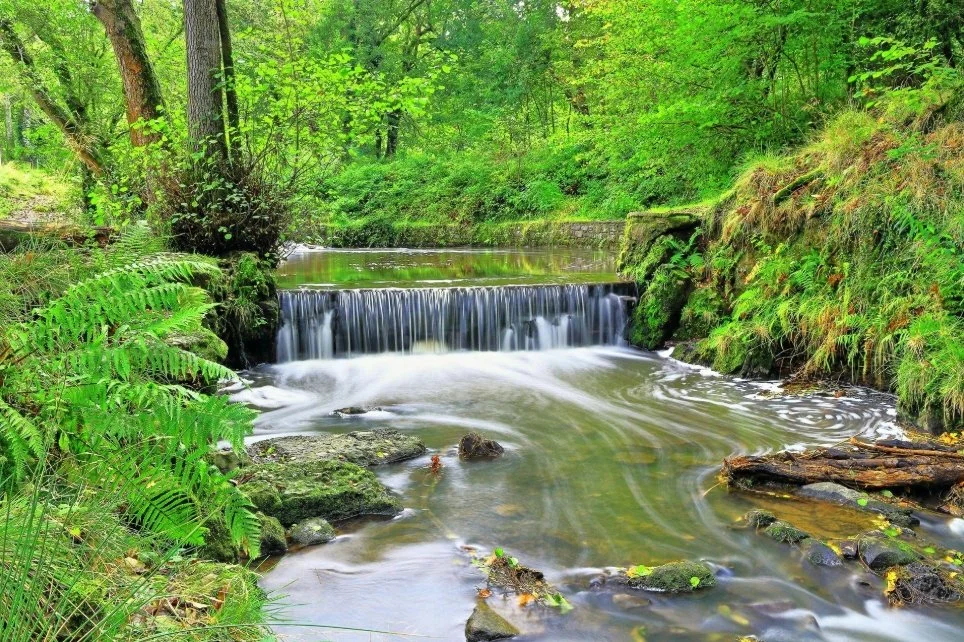

The Beast of Dean.
The first reports of the beast can be traced back in folklore to the 18th and 19th century, with local people describing it as a cross between a giant boar and a moose, it was believed to possess great tusks and huge branching antlers, and is alleged to have been so powerful that it was more than capable of toppling trees and forcing passage through the thickest of hedgerows.
There have been several attempts to hunt and capture this terrifying beastie, the first of which occurred in the early 19th Century, when folk from the local village of Parkend bravely undertook an expedition into the woodland to track down, and capture, or kill the monster. Unfortunately, or perhaps fortunately from the creatures point of view, they were unsuccessful, and the beast managed to elude them.
Modern Encounters
There are still strange encounters reported in the forest. Back in 1995 a group of ramblers reported encountering a large three toed foot print, found in the wet ground. It was claimed to be 8 inches in length and 6 inches in width. The ramblers took photographs of the print and reported their discovery to the local authorities and newspapers. Copies of these photographs have sadly been lost.
In 2019 a group of teenagers reported encountering the monster while on a camping trip, they described the beast as being over 6 feet in length and with dark brown shaggy fur, it so scared them that they abandoned their trip and fled the area.
In modern times boars have been reintroduced into the forest and can be seen scavenging for food, particularly in the autumn time, and whilst British boars can be dangerous, and thus should not be approached, they do not grow over 6 feet in length.
I would urge you not to be deterred by the this terribly beastie or even it smaller cousins the wild boar. The Forest of Dean is a beautiful area, and definitely worth a visit, just remember to keep your eyes peeled for anything… unusual.
Thank you for taking the time to read this blog my friend.
Until next time, stay spooky.
Ghostly Folklore - The Phantom Train of Dunphail
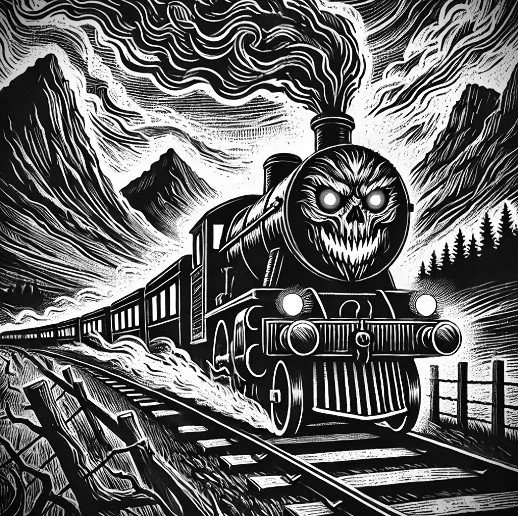
The Grey Ghost Train - Beware…
The ghost train is an iconic kind of haunting - although I would suggest an uncommon one. The idea of a spectral steam engine, charging through the night, belching flames and smoke, terrifying onlookers, only to vanish before their very eyes, instils that pleasing terror that lovers of spooky folklore regularly quest for.
In Northern Scotland, in Moray (Scottish Gaelic: Moireibh or Moireabh.) There runs the Old Dava Railway line. This section of track was opened in 1863 and ran over the old Dava Moor, for a while this was the main route to London. Sadly the line did not survive Mr Beeching’s axe and was closed down in 1965. The Dava Way, is a modern Railway walk, managed by The Dava Way Association (DWA.) Thanks to this hardworking group, you can trek the route taken by those old time trains today. However, to take this journey at night might require a little liquid courage (Whiskey) beforehand.


The Legend of the Grey Train of Dunphail.
Dunphail Railway Station, near Forres, is the scene of a terrifying haunting, folklore suggests that a locomotive carrying cattle met a fiery end nearby, and that this has resulted in its ghostly apparition being spotted intermittently since the 1920s, with sightings even as recent as the 1960s.
Sightings
On a clear winter’s night, John Macdonald was heading home along a path close to Dunphail railway station, when a locomotive with a full head of steam, pulling four carriages, appeared and rushed past the startled local. MacDonald claims the train was travelling around 2ft above the tracks. The date of John’s sighting varies depending on the source, with claims it was sometime between 1917 and 1920.
Two men alleged to have witnessed a strange bright light on the track whilst in a railway cutting. Eventually it faded away. One of the men reported it to the Stationmaster the next day, and discovered that many other people had encountered this unexplained illumination.
One evening in 1949, a woman was returning home after visiting a relative, she was walking along the track, secure in the knowledge that no trains ran at that time of night. To her surprise she claimed to hear a steam engine coming up the line. The noise grew louder and she looked over her shoulder, to her horror she saw the spectral grey train approaching her at full steam. In a panic the poor woman scrambled up the bank and fell to the ground whilst the phantom locomotive raced through the night below her, she reported seeing the fierce glow of the firebox reflected in the pall of smoke from the chimney, and brightly lit carriages streaming behind, all of which were some two feet off the ground!
If you would like more information on the old railway line and its history I enclose a link to the Dava Way website below, it is well worth a visit.
Thank you for taking the time to read this blog my friend. If you enjoy stories of ghosts, monsters, and the uncanny, please consider supporting me by purchasing a copy of my book ‘Fireside Horror,’ a novel told in short stories, each one certain to send a shiver down your spine. Available on Amazon and Audible, Link Below.
Until next time, stay spooky.
Ghostly Folklore – The Haunting of RAF Montrose
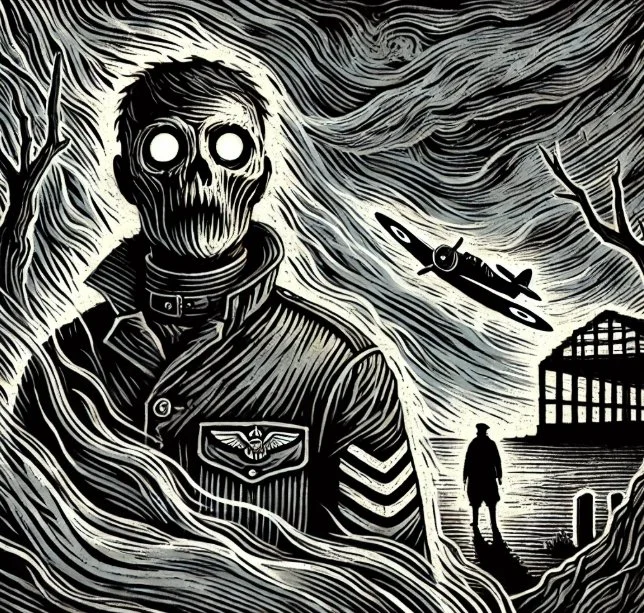
Scary goings on at the now abandoned Airbase.
RAF Montrose (also known as Royal Airforce Base Montrose.) Was one of the country’s most haunted military airfield bases; located in Angus, Scotland, it was the first operational military airbase in Britain, being set up on 26th February 1913, and was one of twelve air force bases planned at the time for the United Kingdom, its was intended to allow the then Royal Flying Corp to provide protection to nearby naval bases.
There are a great many ghosts to be found at this now unused airbase (it closed permanently on 4th June 1952.) From reports of damaged radios, playing old wartime broadcasts, as well as phantom planes being seen overhead, only to mysteriously vanish before the viewer’s eyes, to spectral pilots, wandering about the base at night. Indeed such was its reputation that newcomers to the airbase were given a printed document to help familiarise themselves with the site, a part of which warned about the expected paranormal sightings.
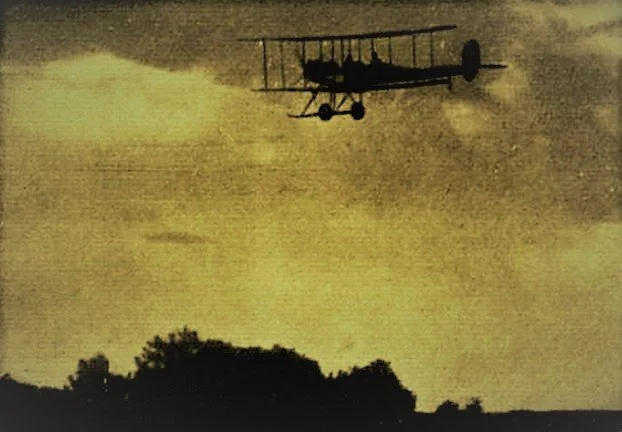


The most famous of Montrose’s phantom inhabitants, and possibly one of the first aviation hauntings, is that of Irishman Desmond Arthur (Picture above), who fell to his death on May 27, 1913, when his plane broke up. His story is recounted below.
On 23rd of May, 1913, at around 7.00am in the morning Arthur took his BE2 biplane for a training flight, after flying for about forty minutes, The right wing broke off the aircraft and Arthur’s seatbelt failed, throwing him out of the plane as it went into a death spin.
One report at the time claimed that the luckless pilot had jumped from the plane of his own free willing, instead of choosing to crash with the machine. The accident was witnessed by an individual on a nearby farm, who provided the authorities with the following macabre details. He heard the plane overhead, and then a strange sound. Looking skywards he saw something plummeting to the ground. Horrified he realised that it was a man, falling in perfect silence. The body of the doomed aviator, was perfectly straight, with its arms held directly above its head. When medics arrived at the scene, Arthur was found dead, nearly every bone in the poor man’s body had been broken.
An Enquiry held after the event blamed the incident on poor manufacturing.
There have been many sightings of Arthur’s ghost over the years, he has been seen walking to the mess hall, vanishing before he reaches its entrance. One pilot spoke of awaking in the middle of the night and feeling terribly cold, looking around he saw a uniformed man sitting in a chair. When he tried to speak to him, the individual slowly faded away.
Thank you for taking the time to read this blog my friend. If you enjoy stories of ghosts, monsters, and the uncanny, please consider supporting me by purchasing a copy of my book ‘Fireside Horror,’ a novel told in short stories, each one certain to send a shiver down your spine. Available on Amazon and Audible, Link Below.
Until next time, stay spooky.
Event Update – The UK Indie Horror Chapter 2: Canterbury Horror Tales
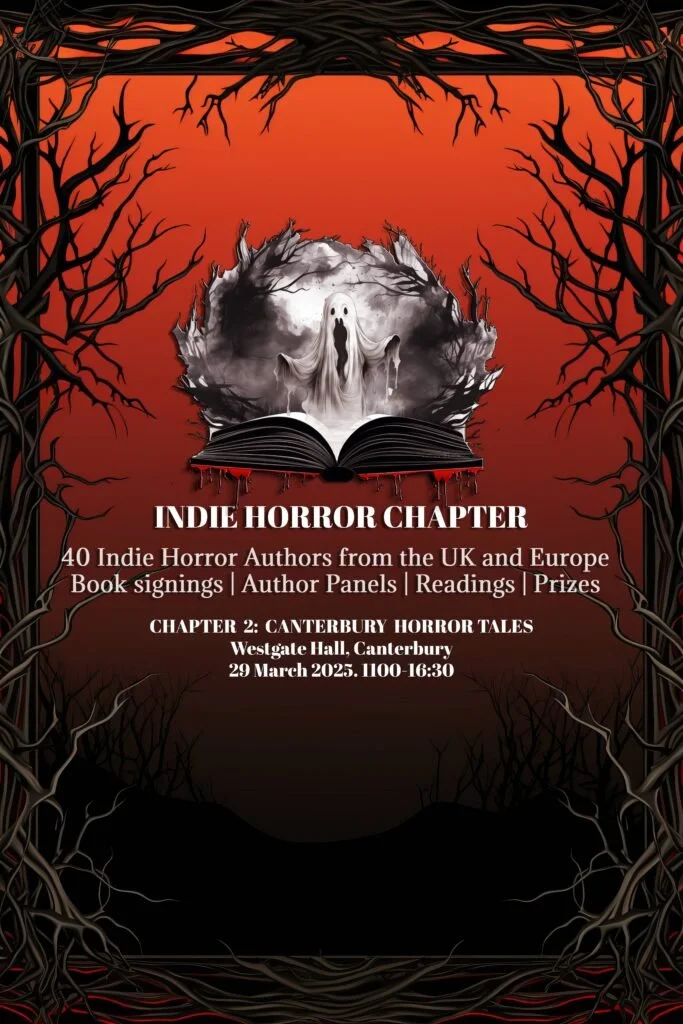
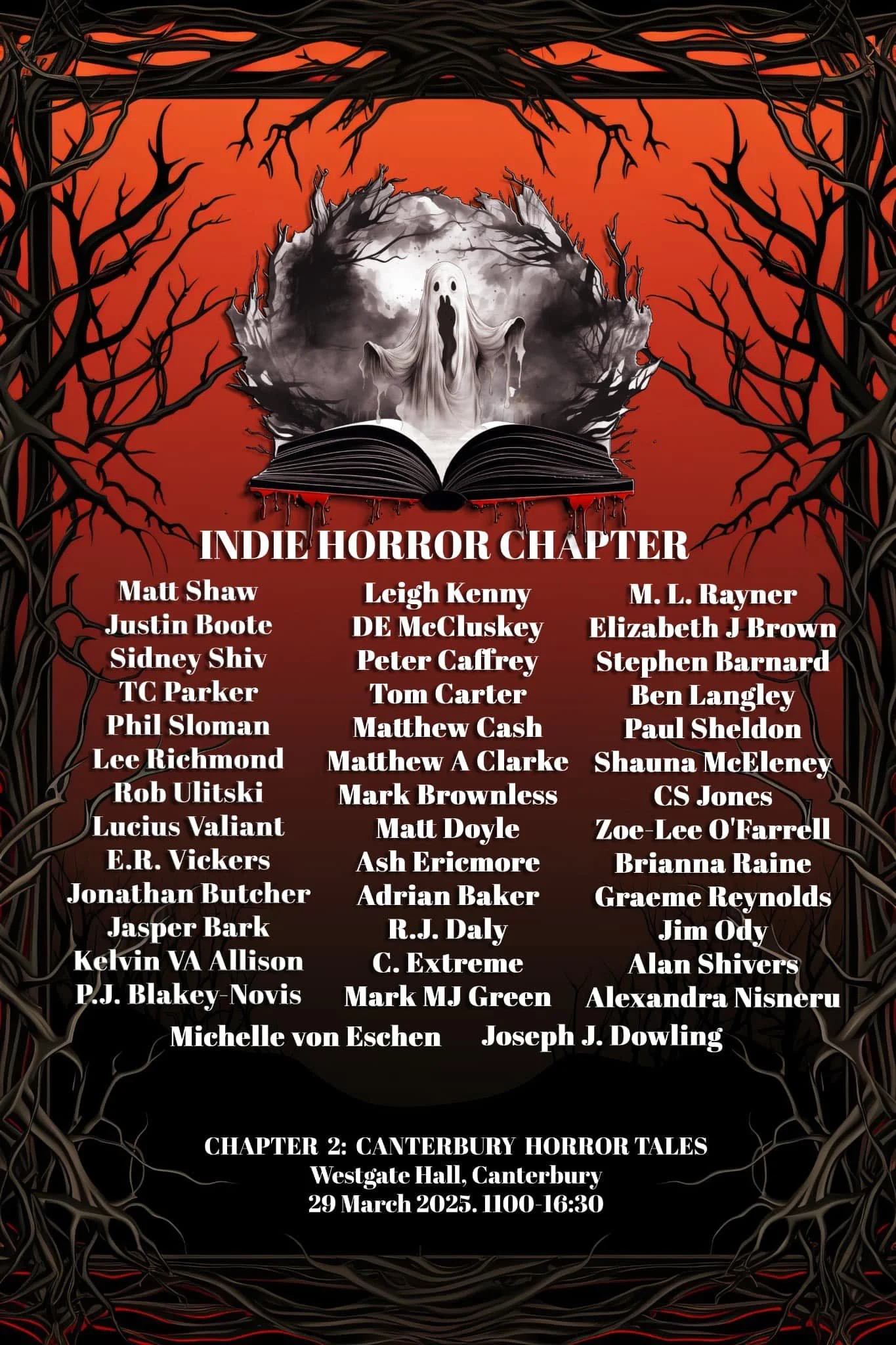
Attention all horror fans, the 29th March 2025, will see the 2nd Indie Horror Chapter Event, a collection of 40, yes that’s right 40 of the best Indie horror and dark literature authors all gathered together in one venue. The event organisers have wisely chosen to contain this terrifying horde (of which I am one) in: Westgate Hall, Canterbury, CT1 2BT. Thus protecting the general population of this historic town from untold nightmares. Entry is free, doors will be opened at 11.00am and will close at 4.30pm.
If you feel brave enough please come down and say hello to us all, I can say - with a fair degree of confidence - that none of us bite. There will be a book fair and readers can not only meet and chat with the authors, but can enjoy a host of other activities including readings, discussion panels, and more. The list of authors in attendance is given below. I have also enclosed a link to the Indie Horror Chapters Webpage
Ghostly Folklore- The Haunted Bog Road of Connemara
An old road through dangerous terrain.
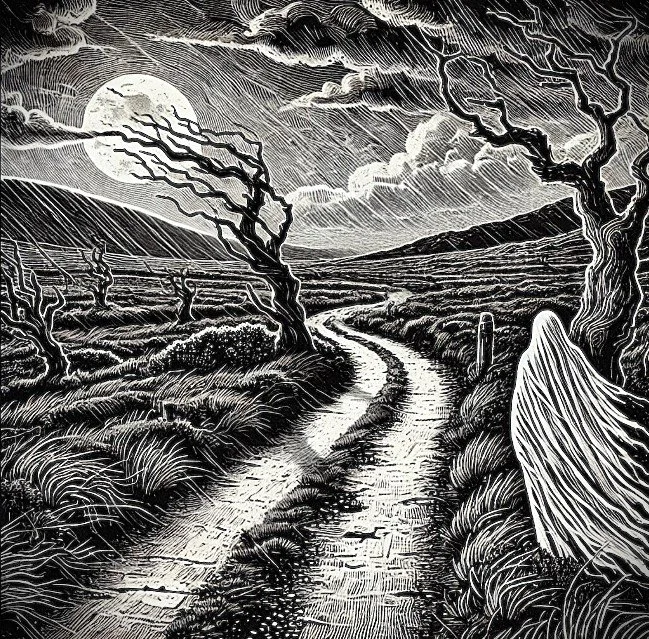
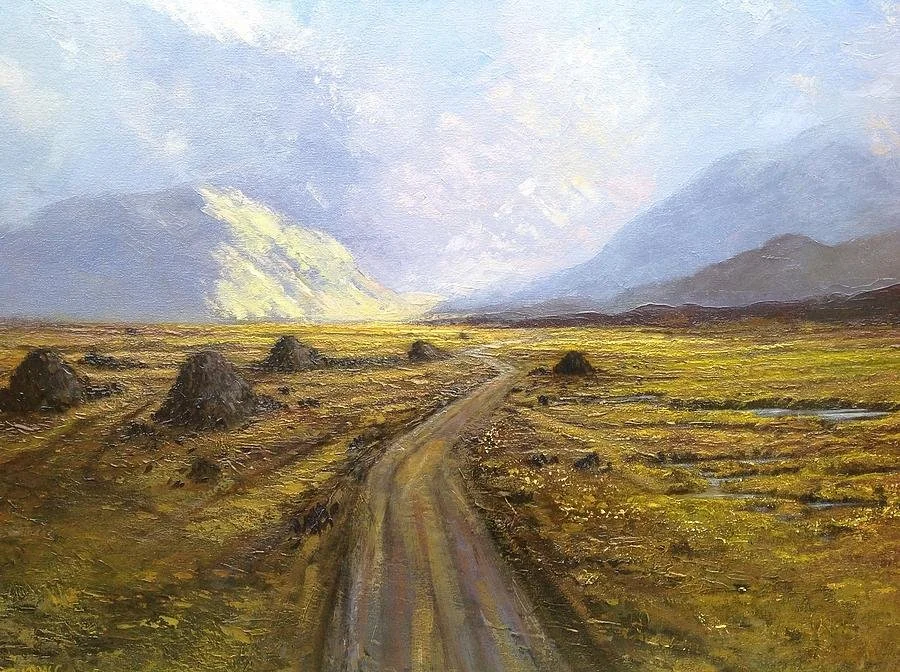
In the North West of the County of Galway, in the Republic of Ireland, is to be found Connemara National Park (Irish: Páirc Naisiúnta Chonamara.) This is an area of savage beauty, containing, Mountains, Bogs, Woodland, and Heaths. The gruesome tale I am going to relate concerns this regions extensive Bog land.
The Old Bog Road, was originally the main route to Galway. Before the founding of Clifden (Irish: An Clochán, meaning 'stepping stones.') A coastal town, found where the Owenglin River flows into Clifden Bay. Today many local people refuse to travel the Bog Road at night, going out of their way to avoid the route.


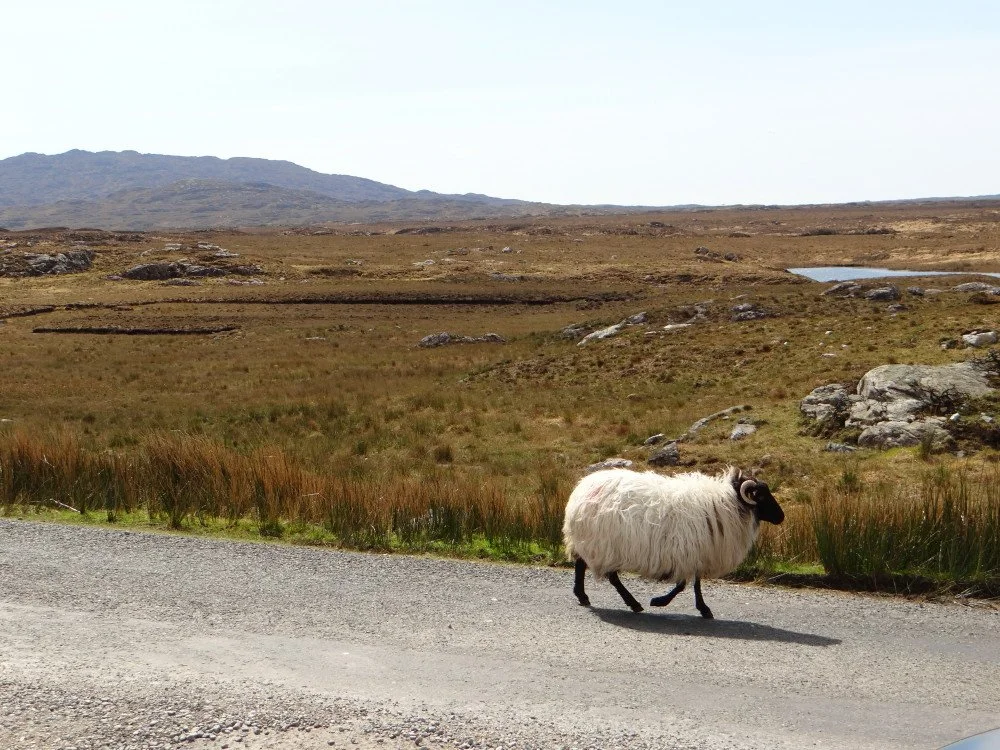
One local from the picturesque village of Roundstone tells the following tale. “I was giving a lift to two old fellas who insisted that they would get out of the car if I turned down the Bog Road… Who am I to say?” Yet another man from Clifden claimed. “People say it’s haunted. Folks do drive off the road a good bit. I wouldn’t be driving it at night, and certainly not alone.”
The Legend of The Old Bog Road.
The story goes that there was an Inn on the old Bog Road named ‘The Halfway House.’ Many years back in the 1790s, it was run by a brother and sister. This ghoulish pair, made it their business to invite lonely travellers to rest the night at their hostelry, however their motives were not altruistic. They would wait until the luckless traveller had settled down for a restful night’s sleep, then on the stroke of midnight they would creep into the persons room, murder them, steal their belongings, and dispose of the body in the surrounding Bogs or Lakes.
It is the ghosts of these hapless victims – whose bodies the murderous siblings fed to the windswept Bog Land – that haunt this lonesome stretch of road, strange shadows can be seen crawling out of stagnant pools, dark shapes flit before cars, and lonely figures are spotted standing by the wayside, only to vanish should a traveller pull over to offer them a lift.
So dear reader, should you find yourself alone in Connemara, why not test your courage, wait until the sun has set in the westering sky, get behind the wheel of your vehicle, and drive along the benighted Bog Road, will you have the nerve to do it? What will your headlights reveal?
Until next time stay spooky my friend.
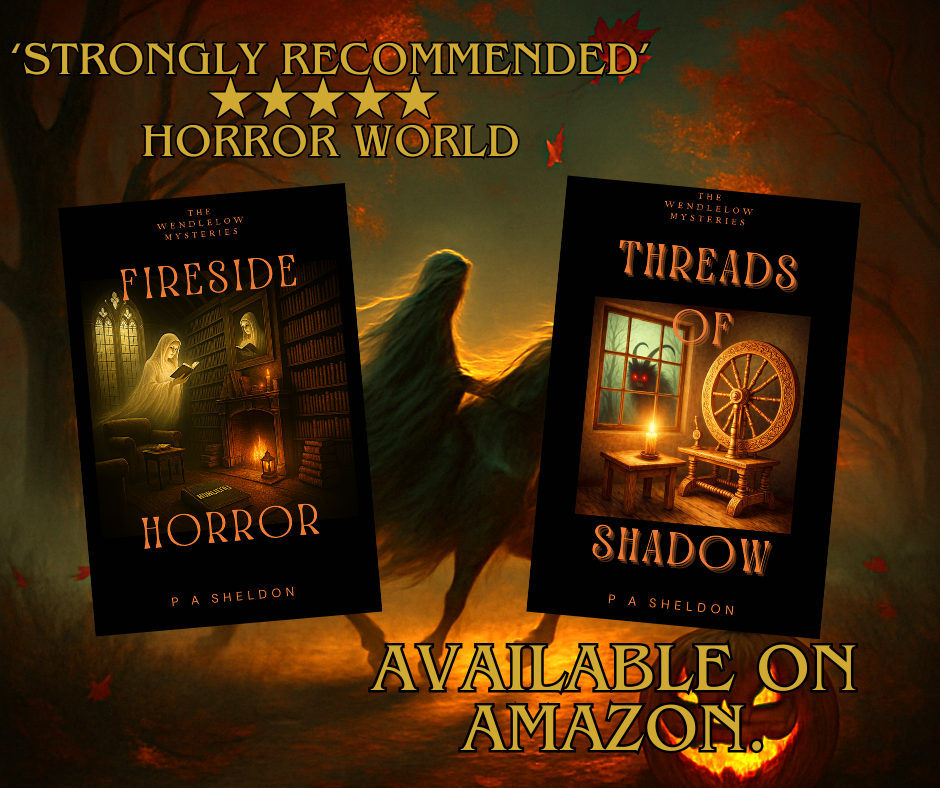
Visit Amazon and Search P A Sheldon
Sources
Wikipedia
panoramicireland.com/photo-tours-blog/connemara-ireland-land-of-bog-mountains-sea-and-sky
www.magpie.travel
Update - Threads of Shadow.
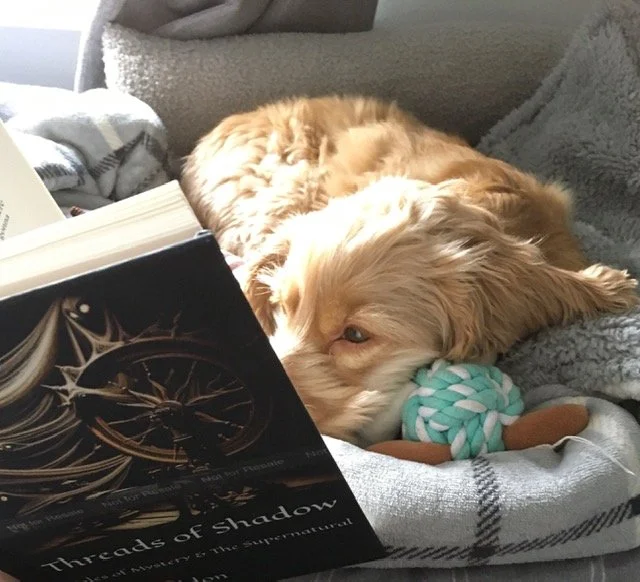
Lily attempts to proof the read the text, but being illiterate, and a dog, she is of no help. She must be useful for something?
Hello my friends, just a short update on my next book ‘Threads of Shadow.’ I have finished writing and revising the text of what will be book two of ‘The Wendlelow Mysteries,’ and have just dispatched a copy to my editor Carson Buckingham. This part of the process usually takes a few weeks. When I receive it back I will start the process of editing the text, this could take up to a month, then I will have to dispatch the book to a few folks willing to give it an advanced read and help me hunt down any typos and further gremlins in the revised version, hopefully the book will be ready for general release in two to three months.
PLEASE NOTE ALL PROOF READING POSITIONS ARE NOW FILLED. A BIG THANK YOU TO EVERYBODY WHO APPLIED.
If you are interested in being apart of the advanced reader group. please message me, I will dispatch a free copy of the book. in either physical or Ebook format, which ever you prefer. I will acknowledge your contribution in the ‘Authors Note’ section of the book. Futhermore, as a thank you, I will send you a signed copy of the book when it is finally released. I’m looking for about three to five people. If you are interested, please message me via the contact section on this website, or through Facebook.
Stay Spooky.
Ghosts and Legends of St. Ives.
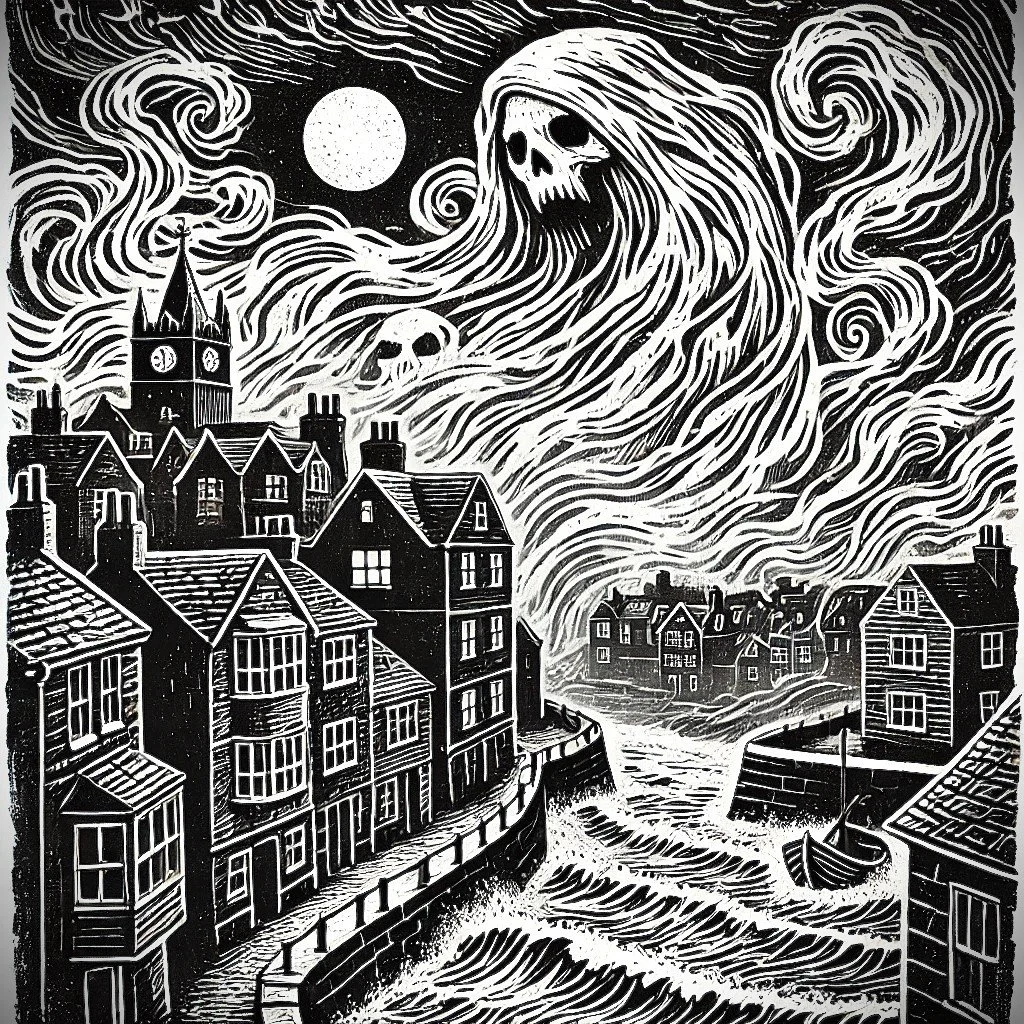
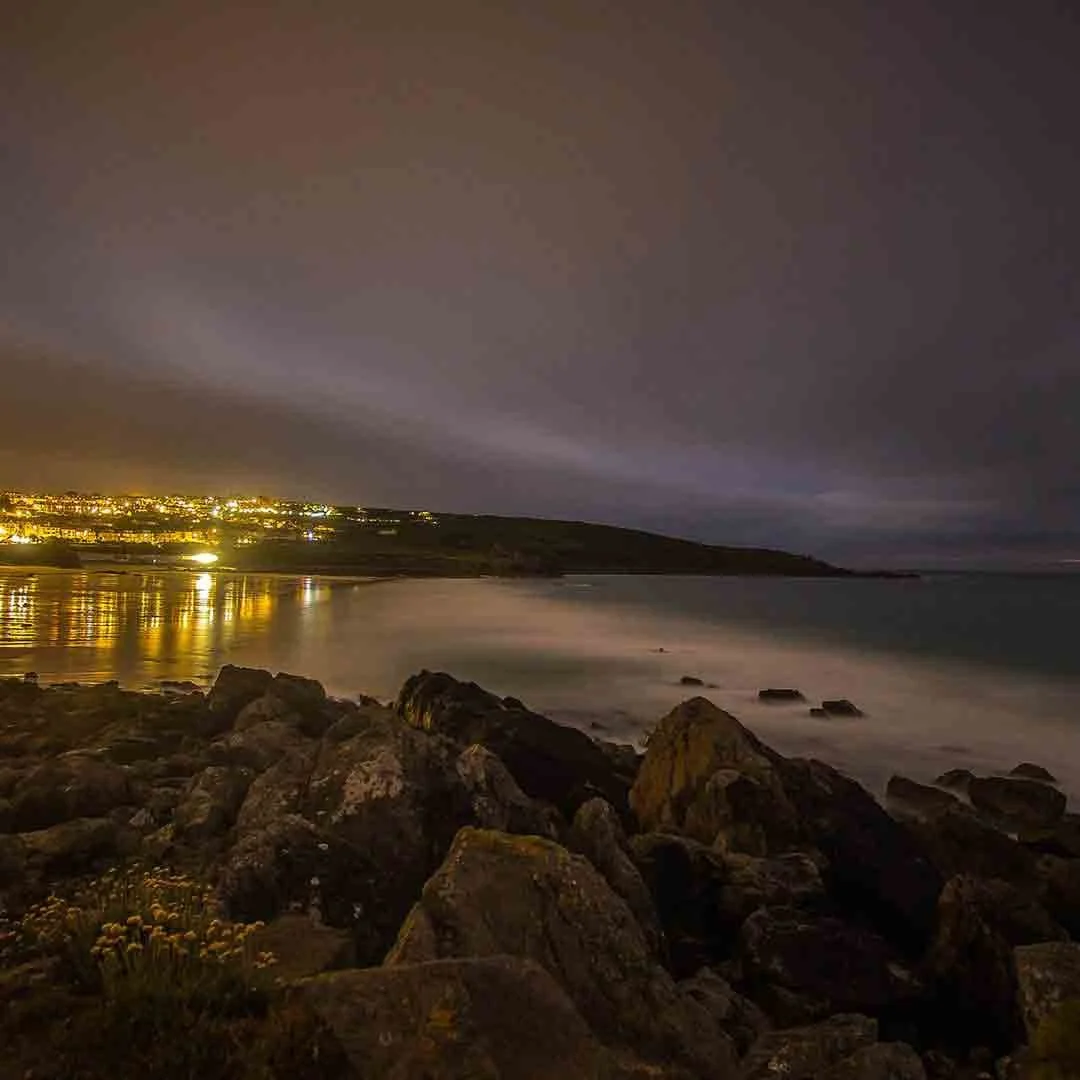
Spectral happenings in the little coastal town of St. Ives.
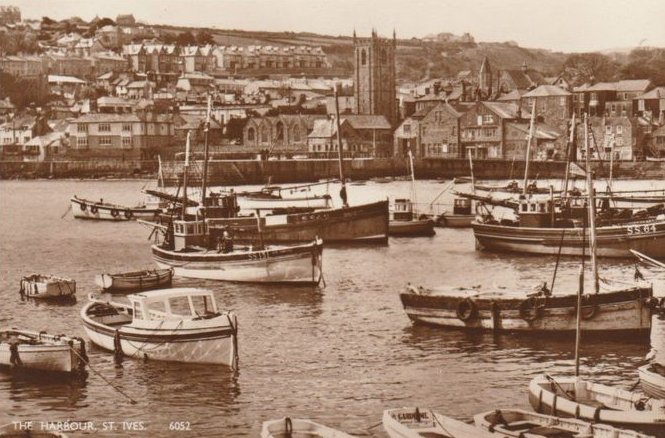
Deep in the English County of Cornwall, clinging to the storm tossed coastline is the historic seaside town of St. Ives. (Cornish: Porth Ia, meaning St Ia’s cove.) Once a prosperous fishing port, a recent decline in this trade has seen the towns economy shift more towards tourism.
St. Ives is home to The Sloop Inn, an old fisherman’s pub dating back to the 14th Century and believed to be Cornwall’s oldest pub. The seaside town has been home to Smugglers, Wreakers and is a favourite location for artists. So it has plenty of history and also a great deal of local legends and ghosts guaranteed to peak the interest of any budding myth hunter.


Saint Ia of Cornwall
St. Ives is associated in legend with the arrival of St. Ia in Cornwall. St. Ia was an Irish Princess from the 5th Century, who became a saint and martyr. She arrived at the sea shore to discover that her companions had departed for Cornwall without her. Upset she prayed, and noticing a small leaf floating on the sea, touched it with a rod to see if it would sink, but it grew larger. Trusting God, she embarked upon the leaf and was carried across the Irish Sea, arriving at Cornwall before the others.
Dead Man’s Walk
Dead Man’s Walk is a narrow, shadowy lane, that was once the route taken by condemned prisoners making their final journey to their place of execution. It is a area best avoided at night, as people walking there describe feelings of depression and terror. Shadowy figures and ghostly footsteps have also been reported here.It is said that if you are wandering down this street and hear the church bells ring an extra chime, it is a sign of a guilty conscience.
Trencrom Hillfort
Not far from St. Ives lies, Trencrom Hill fort, orginally called Torcrobm the name is derived from the Cornish "torr crobm", meaning, 'hunched bulge.' it was first used as a settlement in the neolithic period, and then used as a hillfort in the Iron age. Legends says that the treasure of a great Cornish giant is buried somewhere on Trencrom, supposedly guarded by Spriggans, a race of grotesquely ugly, wizened old men with large childlike heads.
The Lady with the Lamp
There is told - about the town - the sad tale of a ghostly woman who wanders about the beach bearing a spectral lamp. She is believed to be a mother whose baby was swept into the sea during a storm and was lost forever. The grieving woman passed away shortly after this tragic event, and though her body was laid to rest, her spirit was not. Locals say that even today a flickering light can be seen on the beach before a storm, and that this light is the Lady with the Lantern, wandering the lonely sands in search of her lost baby.
Thank you for taking the time to read this blog my friend. If you enjoy stories of ghosts, monsters, and the uncanny, please consider supporting me by purchasing a copy of my book ‘Fireside Horror,’ a novel told in short stories, each one certain to send a shiver down your spine. Available on Amazon and Audible, Link Below.
Until next time, stay spooky.
Ghostly Folklore - The Black Dog of Newgate Prison

The Black Dog - Terror of The Gaol.
The dreaded Newgate prison was located just inside the city of London. Originally built in the 12th Century during the reign of Henry II, it was part of an original roman gate built into the wall that surrounded old London town. Since it was first constructed it has been rebuilt and extended many times, and was in use until 1902.
Newgate had a poor reputation that dipped to its lowest level in the 15th Century, when the decaying building became a place of true misery, prisoners were dying from the overcrowding, rampant disease, and bad sanitary conditions. It is thought that a total of 22 prisoners died of ‘Gaol Fever’ (Also known as Typhus Fever.) As a result it was decided to renovate and improve the prison.


It was destroyed in the Great fire of London during 1666 and rebuilt again around six years later, with the addition of a windmill to the roof - an attempt to improve ventilation. In 1783 the site of the cities gallows were moved from Tyburn to Newgate, with hangings being performed in the street before the prison in front of jeering, unruly crowds. Until eventually the gallows were moved inside the prison walls.
The Black Dog
Held within the Guildhall Libraries aged stacks, is an old work with the wonderful title. ‘The Discovery of a London Monster, called The Blacke Dogg of Newgate: Profitable for all Readers to Take Heed by.’ Supposedly a true account written by a prisoner called Luke Hutton.
During a period of famine in the reign of King Henry III, desperation drove the prisoners to new depths of savagery. Among them languished a scholar, whispered to be a sorcerer, a manipulator of the dark arts, and diabolical witchcraft. This ill-fated man fell victim to their insatiable hunger, a grotesque crime took place - a crime that would unleash a vengeful spectre upon those who had feasted upon the magician’s flesh.
From the shadows emerged the shade of a monstrous black hound, prowling the prison's passages. The inmates, gripped by terror, recognized this canine phantom; it was the spirit of the sorcerer, hell-bent on exacting revenge upon his murderers. The malevolent creature hunted down and devoured the guilty one at a time, those few who survived this supernatural culling were left with permanently shattered minds.
The Crawling Shadow of Amen Court
Not far from Newgate is the attractive Amen Court. Though this street existed in the shade between the great prison and St Paul’s Cathedral, it was a pleasant place to live, a little haven within the city. But the horrors of Newgate are believed to have stretched out their hand and touched even this peaceful place. A terrifying shapeless shadow has been regularly seen crawling along the roofs of the buildings, though whether this thing is The Black Dog, or the apparition of some escaped convict is not known.
Thank you for taking the time to read this blog my friend. If you enjoy stories of ghosts, monsters, and the uncanny, please consider supporting me by purchasing a copy of my book ‘Fireside Horror,’ a novel told in short stories, each one certain to send a shiver down your spine. Available on Amazon and Audible, Link Below.
Until next time, stay spooky.
Dragon Lore - The Gwybr
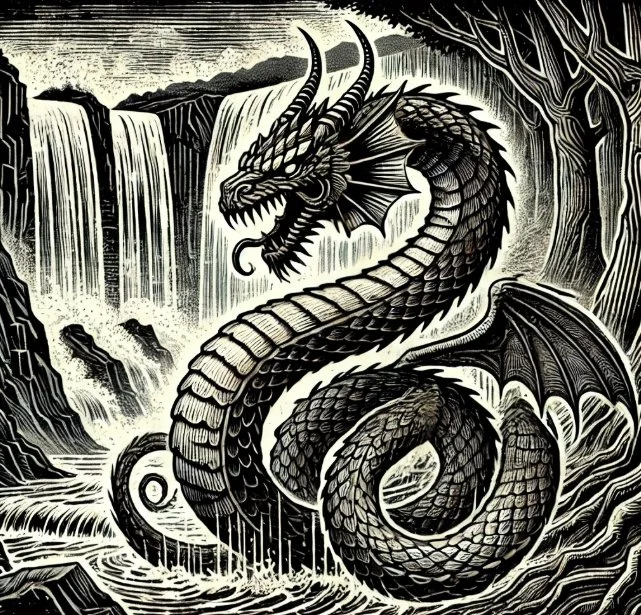
The Gwybr. Beware…
In the northeast of Wales lies an area of mountains and moorland known as The Berwyn Range (Welsh: Y Berwyn or Mynydd y Berwyn) or Berwyn Mountains National Park. A sparsely populated area close to the border with England, it is popular with hill walkers, and is covered with heather, grassland and bracken. Its tallest summit is Cadair Berwyn which is 2,730 ft above sea level.
Pistyll Rhaeadr (‘Rhaeadr Falls’) is a waterfall within The Berwyn Mountains National Park, it is formed by the Afon Disgynfa (River Disgynfa) falling in three stages over a 80 meter cliff-face - making it higher than Niagra falls - into the Afon Rhaeadr below. The tallest stage is estimated at about 40 metres. It is an enchanting place, even more so on the rare occasions that it freezes into an ice sculpture at winter. This scenic, mystical location was said to be the home of a winged serpent, called ‘The Gwybr.’ also known as The Dragon of Llanrhaeadr.


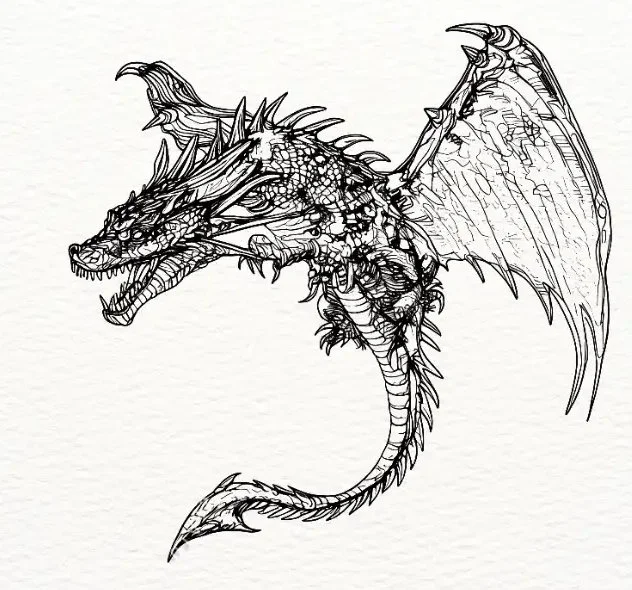
The story goes that in a lake by the falls lived a winged serpent who would fly down the valley to the village and seize children, women or animals, taking them back to the lake to devour.
Nobody knew how to defeat the Gwybr, so a number of villagers consulted a wise woman in the hills. She explained to them what they had to do. The men must gather together and forge three enormous spiked collars, whilst the womenfolk collected all the linen in the village, sewed it together and dyed it blood-red.
Then, when all was ready, the whole village was to set off to a great standing stone in the field at the foot of Rhos Brithin. Here the men were to drop the three spiked collars over the pillar whilst the women wrapped the whole lot in the red linen. Then they should set about building a circle of fire around the pillar.
This was done, and when the Gwybr sighted it, the beast thought it was another dragon illuminated by the flickering flames. It roared with anger and attacked, spearing its breast on the hidden spikes. Again and again it struck, and each time the spikes drove deeper into its body until it dripped with blood and grew weaker. Eventually it could fight no more and collapsed bleeding and dying at the foot of the pillar.
The villagers, with the help of the wise woman of the hills, had outwitted the gwybr and once more the village was safe.
There are many more stories associated with this area, incuding claims that a UFO crashed into the mountain in 1974 - after an earth tremor was felt, and strange lights sighted by locals near the summit. Some people have speculated that the UFO was retrieved by the British government and its wreckage taken to RAF Rudloe Manor.
Thank you for taking the time to read this blog my friend. If you enjoy stories of ghosts, monsters, and the uncanny, please consider supporting me by purchasing a copy of my book ‘Fireside Horror,’ a novel told in short stories, each one certain to send a shiver down your spine. Available on Amazon and Audible, Link Below.
Until next time, stay spooky.
Ghosts and Legends of Glamis Castle
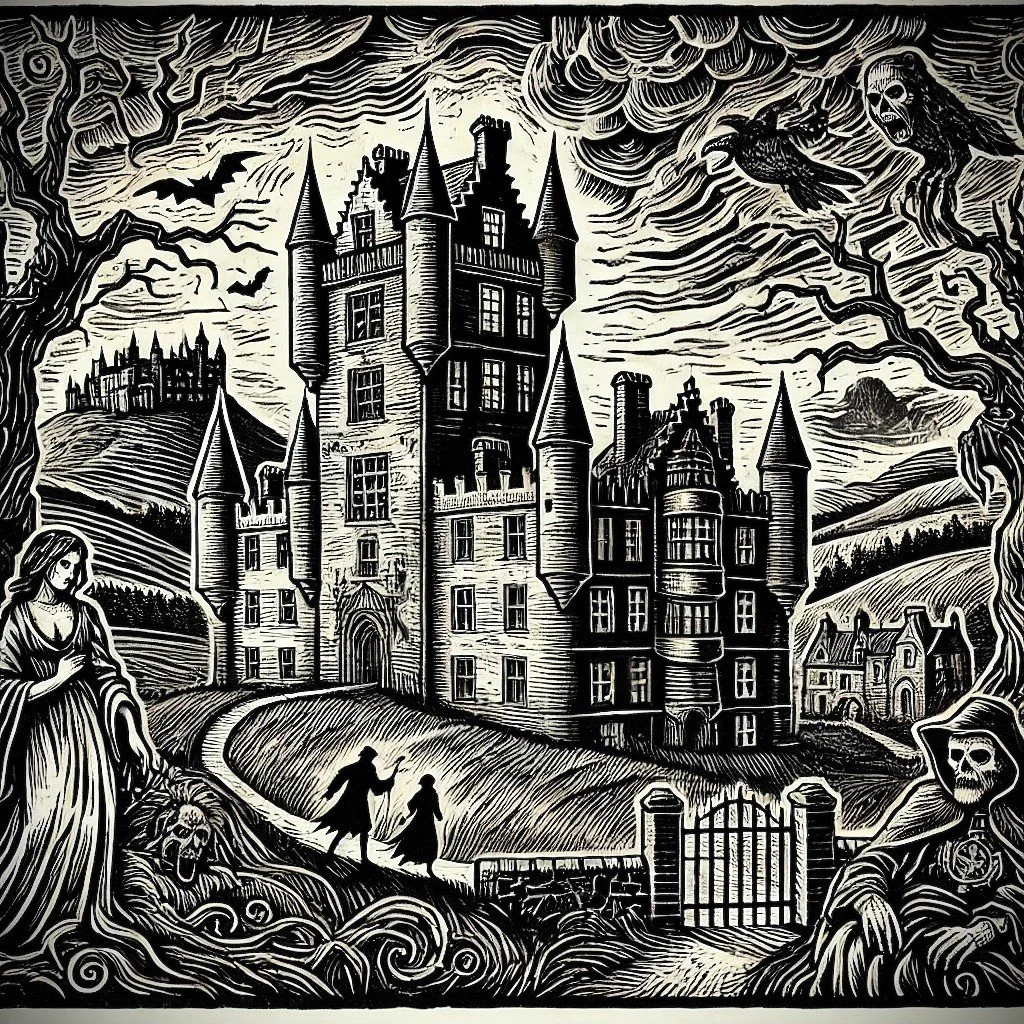
A haunted castle, not unlike Glamis.
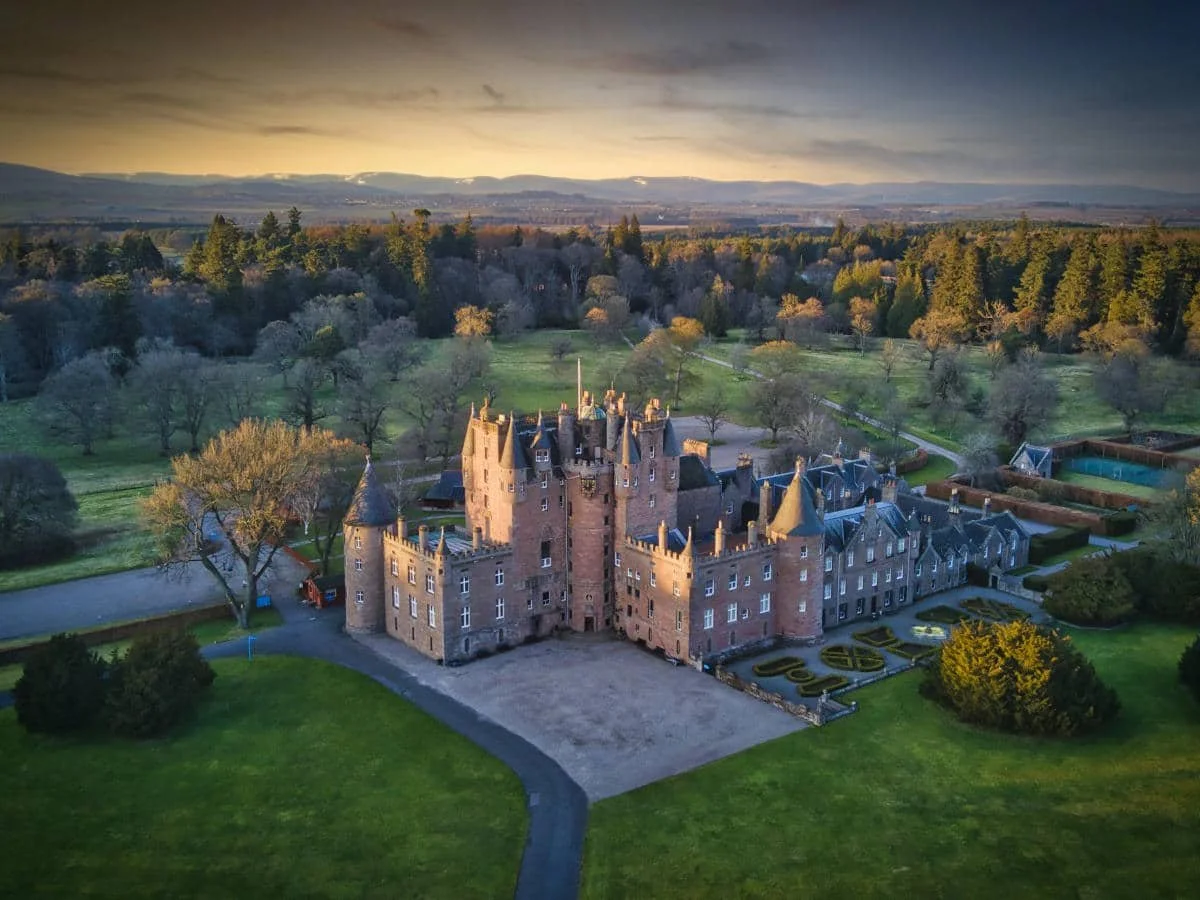
Glamis Castle is a stunning property, located in the region of Angus in Scotland, surrounded by beautiful countryside, it has been a home to royalty, and is the sort of place where one can only dream of living. Built in the 14th Century it is the seat of the Lyon family. The castle you see today was largely constructed in the 18th century, and was the childhood home of the late Queen Elizabeth, The Queen Mother . Her second daughter, Princess Margaret was born there on 21 August 1930.
Glamis was originally the location of a Royal Hunting lodge, where in the year 1034 Malcolm II, The King of Alban died a violent death, supposedly when fighting bandits in the area. It was nearby, in Eassie Burn (watercourse) that the Eassie stone was discovered in the late 18th Century, a Pictish stone (pictured below) carved with a cross and other images, it has been dated back to the mid 8th Century. With such a fine history, it is no surprise that this grand old building is brimming with Legends and Ghosts.



The Woman without a Tongue
The most reported of Glamis spectral inhabitants, and the most chilling, is the ghost of the woman with no tongue. She has been sighted wandering around the grounds pointing to her badly wounded face.
People also claim to have seen her staring mournfully out from a barred window within the castle. No one is certain who this unfortunate spirit could be or what may have happened to her.
The Grey Lady
Another phantom oft seen stalking Glamis halls is that of a Grey Lady, said to be the ghost of Lady Janet Douglas, her first husband was John Lyon the Lord of Glamis. when he died in 1528, people whispered that she had poisoned him, she was however cleared of this crime, and went on to marry again, this time to a man called Archibald Campbell of Skipness.
She finally met her grisly end at the stake , where she was burned for being a witch in 1537, after being accused of conspiring to poison King James V of Scotland
The Young Servant Boy
The shade of a young servant boy has been seen sitting on a stone seat close to the door of the Queen’s room He is completely silent, and has never been seen anywhere else in the Castle.
Ghost of Earl Beardie
The legend of Earl Beardie is a horrifying one. He is the most infamous of Glamis Castle’s ghosts. Earl Beardie’s real name was Alexander Lindsay, 4th Earl of Crawford. He was what we in the business call a Wrong ‘Un’, a cruel, twisted man, a heavy drinker, his spectre is seen, heard, and felt throughout the castle, with reports of children being awoken at night to find his shadowy figure standing over their bed.
His ghost resides in a secret room in the castle, gambling with the Devil for all eternity. The legend goes, he was visiting the castle one Sunday night, upon returning to his room, he was shouting in a drunken rage for someone to come and play cards with him. Nobody wanted to take him up on his offer as it was the Sabbath, so he finally declared that he’d play the Devil himself.
Shortly after, there was a knock at the door, it was a tall gentleman in a long dark coat, and he asked if Earl Beardie still needed someone to join him in a game of cards. The Earl agreed to play the man, and they retired to a room in the castle, slammed the door shut, and proceeded to gamble.
Later that night one of the servants overheard a commotion in the room, and bravely looking through the keyhole, saw the Earl ranting at a tall, smokey figure. Within moments the poor servant was blinded in one eye by a bright light. Earl Beardie, - at least the living Earl Beardie - was never seen again.
The Monster of Glamis
Another of the castle legends is that of the Monster of Glamis, a rather tragic tale. Said to be a deformed child born to the Lyon family in the 1820’s this poor infant was believed to have died shortly after his birth. However some guests to the castle claimed the child lived, was disinherited, and locked away in a secret room, only being allowed out to walk the roofs at night. His ghost now haunts the section of the parapets known as “The Mad Earl’s Walk.” The room where he was supposed to have lived was believed to have been sealed up in the 1920’s after his death .
An alternative version of the legend says that to every generation of the family a vampire child is born and walled up in that room.
Other Tales
The Ogilvy Clan fled to Glamis Castle seeking refuge during a conflict with the Lindsay Clan. Lord Glamis welcomed them and hid them in a secret chamber. However, as a friend of the Lindsays, the Earl sealed the door and left the Ogilvy’s to starve. Years later the skeletons of the Ogilvy’s were discovered when strange sounds were heard coming from the concealed room.
There is another tale of a monster, this one is said to have dwelt in Loch Calder near the castle, a thing so terrifying no one will speak of it.
Thank you for taking the time to read this blog my friend, I do hope you didn’t find it to unsettling and that you will be able to find a restful nights sleep. If you enjoy stories of ghosts, monsters, and the uncanny, please consider supporting me by purchasing a copy of my book ‘Fireside Horror,’ a novel told in short stories, each one certain to send a shiver down your spine. Available on Amazon and Audible, Link Below.
Until next time, stay spooky.
Folklore – Ghosts and Legends of Alderley Edge.
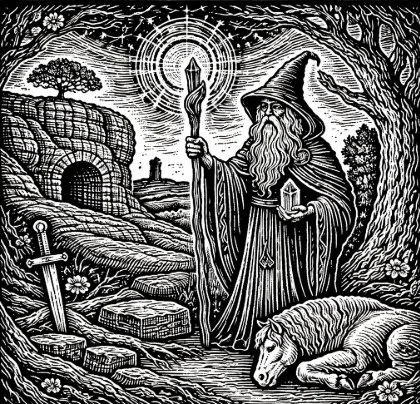
The Wizard, carrying a weird looking stone.
The Village of Alderley Edge can be found in the North-west county of Cheshire in England. It lies at the edge of a sandstone escarpment, covered in woodland. An area of great natural beauty, it has wonderful views over the Cheshire plain, referred to as ‘The Edge’ – An Edge is a descriptive term, used in Cheshire and the neighbouring counties to label areas of high land.
Alderley Edge has a long history of copper mining dating back to the Bronze Age, that continued off and on unit the 1920’s. There are quite a few legends associated with the edge, stories of the devil, sleeping knights and spectral figures, drench the landscape.



Many people report seeing the ghost of a short old man with a white beard, running close to the road (the B5087) apparently completely naked! One police officer told of seeing this spectral figure. The brave man approached him, only for the unclothed octogenarian to vanish into thin air.
The ‘Devils Grave’ is a cave located, at stormy point - a rock formation overlooking the north-east slope of Alderley Edge. Legend has it that if one runs about it widdershins (anti-clockwise) three times, Old Nick will appear before you. In another version it is possible to resort your virginity by performing the same action.
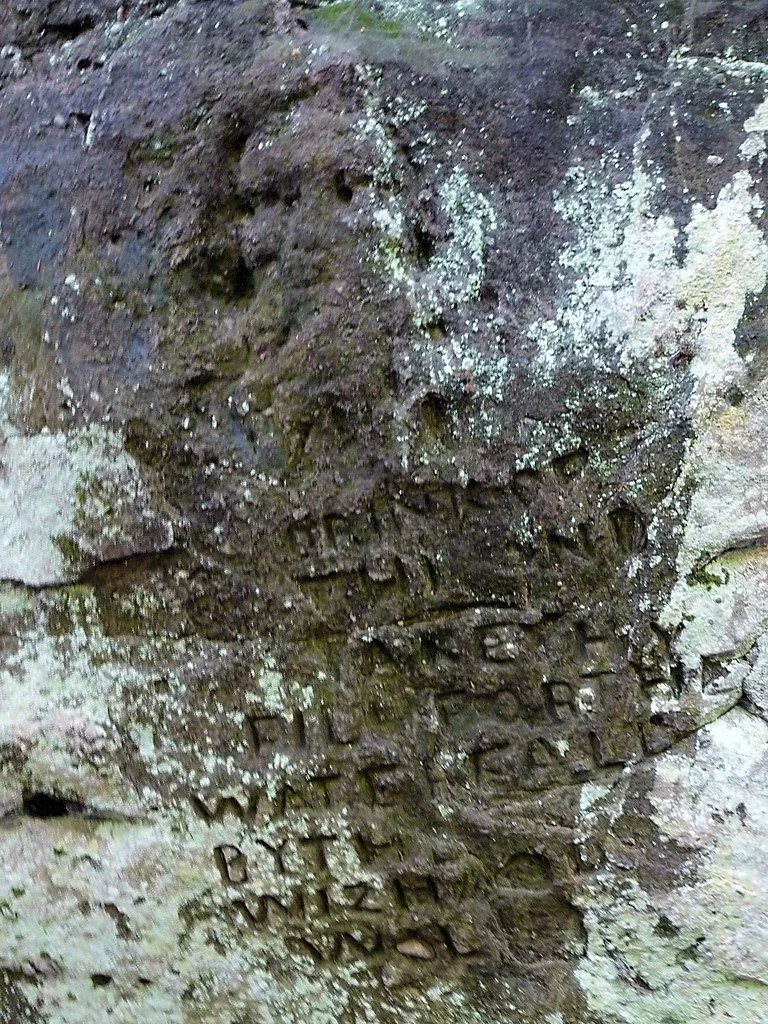
Travellers wandering the edge can refresh themselves at a well spring, above which is a carving of a bearded face, said to be that of a Wizard, his story is perhaps the most well-known - with various pubs and tea rooms being named after him - and is given below.
Once upon a time, a farmer from Mobberley was on his way to Macclesfield Market to sell a white mare. The horse was the finest of his stock, and he was sure that he could get a good price at the market.
As he passed by the steep sandstone cliffs that make up Alderley Edge, he was stopped by an old man of noble stature with a white beard, and clothes that seemed to belong to an earlier period of history. The old man asked if the farmer would sell his horse to him for a fair price. The farmer refused, hoping that he could get a better price for such a fine animal at the market.
Once at the bustling market it seemed as though he had been bewitched. Although his animal was admired and commented on, not a single offer was made, although lesser animals were sold quickly for good prices.
Dejected the farmer set off back to Mobberley, as he passed Alderly Edge the same old man appeared and asked if he could buy the horse. The farmer agreed and the wizard motioned him to follow, he led the farmer through the trees to the foot of the sandstone cliffs that make up the edge. The wizard touched the rock with his staff, and the rock parted with a thunderous sound to reveal a huge cavern. The old man led the farmer inside the earth reassuring him not to be afraid.
The farmer could not believe his eyes, for inside the cavern hundreds of armour clad warriors lay in a deathly sleep. Every warrior bar one had a white horse standing next to him. The old man (who seemed to be a wizard of great power) explained that the host was ready and waiting for the day when their countrymen would need them, then they would arise and fight to save the country. The wizard led on to a pile of gold and jewels, and told the farmer to take his fill as payment for his mare.
The farmer grabbed a handful of golden coins and jewels, stuffed them into his pockets and walked out through the opening into the bright sunlight. The farmer, overwhelmed by his strange experience, set off running as the rock closed with a dull thud behind him. Although he tried, he could ever find the door again.
The legend of Alderley Edge inspired the work of local author Alan Garner, when he wrote his novel ‘The Weirdstone of Brisingamen’ a wonderful book, which can be enjoyed by adults and children alike. I have attached a link to it below. Until next time, thank you for taking the time to read this blog. Stay spooky friends.