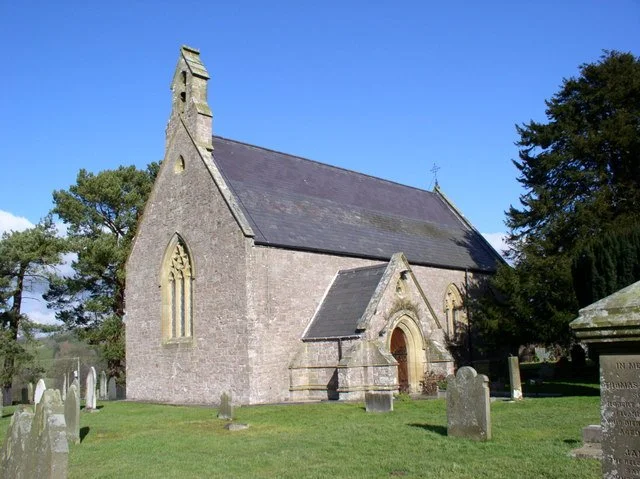
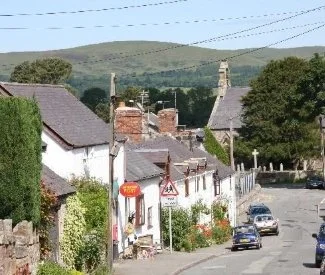
Hello, my spook-loving friend. For today’s chilling tale, we must travel to north-east Wales, to the county of Denbighshire. Here we will find the small rural community of Llandegla, a quaint village that sits beside the River Alyn, nestled comfortably beneath the Clwydian Hills.
Llandegla is Welsh for ‘the parish of Saint Tecla’, probably named after Tegla Forwyn, or Tegla the Virgin, an obscure saint whose origins and deeds have largely been lost within the mists of history, though she seems to have a strong local association with healing.
But Llandegla has another legend attached to it, and this one is far darker: a legend of a spectral fiend that so terrorised the folk of the village that they were forced to call upon the aid of a Welsh wizard in a desperate attempt to rid themselves of the menace.
This grim little episode in village history was recorded by Elias Owen, a Welsh Anglican clergyman, antiquarian and collector of folklore. He worked as a school inspector during the Victorian era, and it was this job that brought him into contact with communities across north Wales.
According to Mr Owen, he received the account of Llandegla’s otherworldly troubles from Mr Roberts, a former schoolmaster in the village, who had himself heard the tale from the local weaver who was also the old parish clerk, this is his tale:
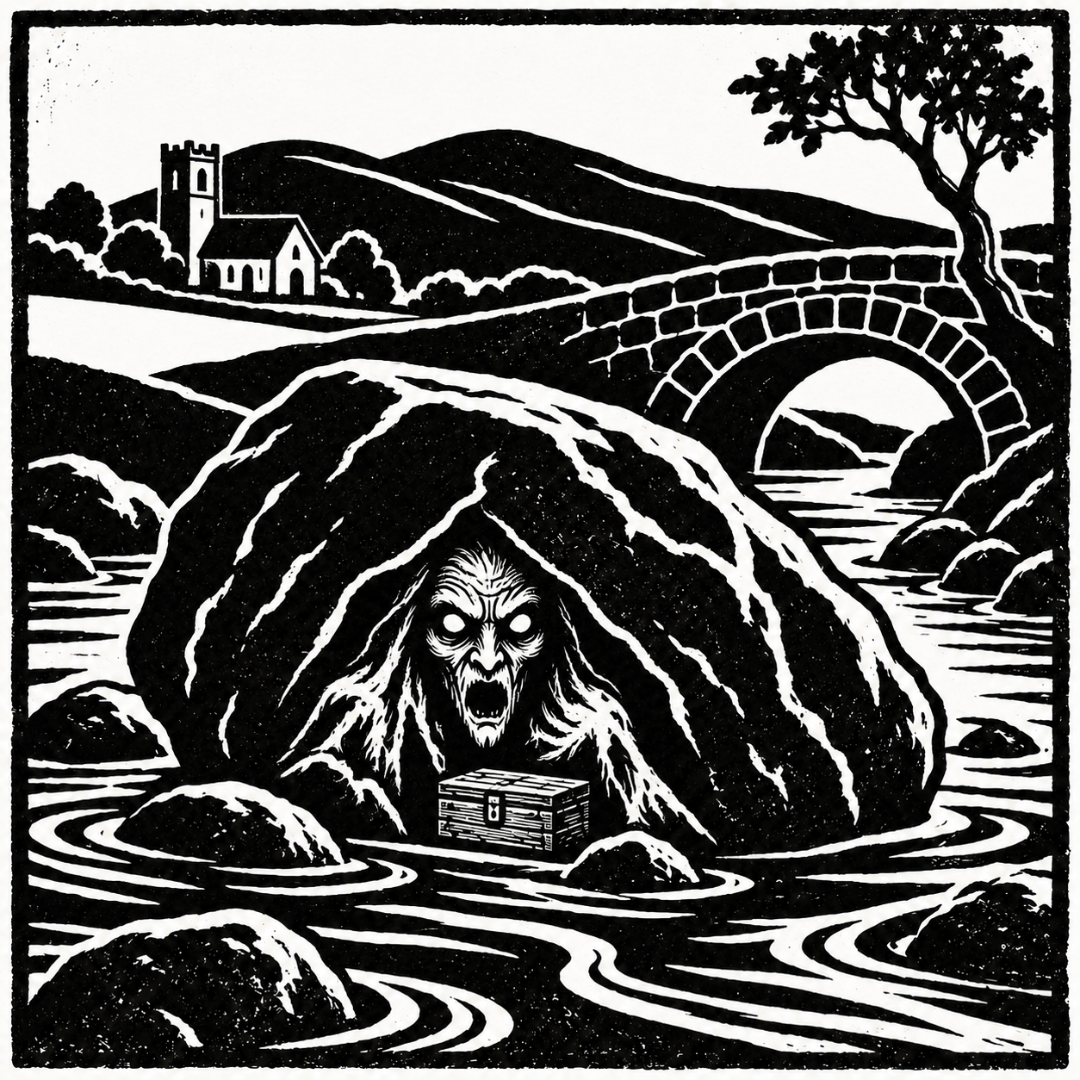
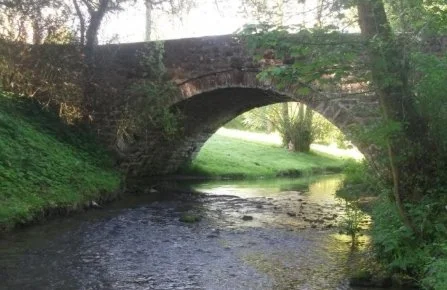
A small mountain stream runs close to the secluded village. In that stream can be found a huge stone, one that must never be moved, for trapped beneath it is a wicked spirit that was once the terror of the village.
The tale goes that the old rectory at Llandegla was haunted by a troublesome spirit. No peace was to be found within the building’s walls, as every night the phantom was about its business. I have little doubt that the residents slept poorly beneath its roof and that villagers learned to keep their distance from the rectory once darkness shrouded the settlement.
Finally, some right-thinking villager decided that enough was enough. A message was sent to a man who lived at Graianrhyd, a village approximately three miles north-east of Llandegla as the crow flies. The man in question was named Griffiths, and he had a reputation as a conjuror—a clever fellow and just the sort to deal with the rectory’s problem.
He agreed to come to the rectory and do what he could, but the spirit was not easy to overcome. Though Griffiths encountered it night after night, it always appeared in a form he could not approach, leaving the conjuror unable to master it. Other accounts claim it smashed plates and threw objects about, probably in the hope of scaring the Welsh wizard away, but Griffiths was made of sterner stuff.
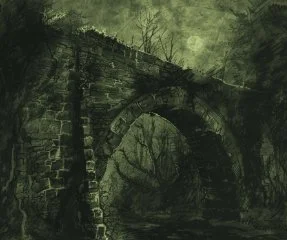
Finally, it came to him in the form of a fly. Quick as a cat, Griffiths saw his opportunity and captured the spirit placing it in a small box. This he buried beneath a large stone in the river by the bridge near Llandegla Mills. So long as the stone remained undisturbed, the spirit would be trapped, unable to cause any more mischief. But woe betide any person who should lift the stone and open the box beneath it!
It is claimed that the spirit is also linked to a certain tree that grows beside the bridge. Once it reaches the height of the bridge’s parapet, the spirit will be released, free to make more mischief. So, to prevent this, the local schoolchildren nip off the upper branches, checking its upward growth.

Click to access The Book Shop.
SPECIAL OFFER
Thank you for taking the time to read my blog. If you enjoy tales of the strange and the unknown, now is a great time to pick up a copy of Fireside Horror for the incredibly reasonable price of £8 on Amazon UK or $10 on Amazon US and Canada.
It’s a great way to begin enjoying the spooky pleasures of The Wendlelow Mysteries horror trilogy, which tells the story of a haunted town and the people—and things—that call it home. Unfolding across twenty-seven interconnected stories, the trilogy reveals both the town’s origins and its ultimate fate.
Links to the books and audiobooks can be found in the Shop section of this website.
Until next time, my friend.
Stay Spooky.
Sources
Wikipedia
Elias Owen, Welsh Folk-Lore (1896)
www.mythslegendsodditiesnorth-east-wales.co.uk