A Penny for the Guy?
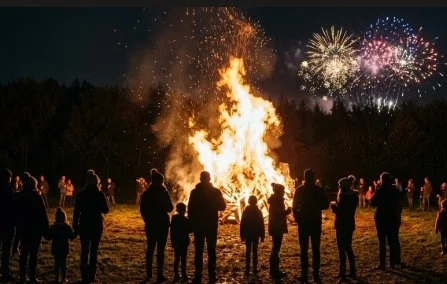
Stand outside on a cold night in early November, almost anywhere in England, and your nose will detect the scent of woodsmoke on the breeze, while ruddy flames glow in parks and gardens across the country. Wait long enough and you will hear whistles and bangs as the sky is illuminated by stunning displays of fireworks. For this is the season of Bonfire Night, a time when all England is called to remember.
So the rhyme begins:
“Remember, remember the fifth of November,
The Gunpowder Treason and Plot,
I know of no reason why the Gunpowder Treason
Should ever be forgot.”
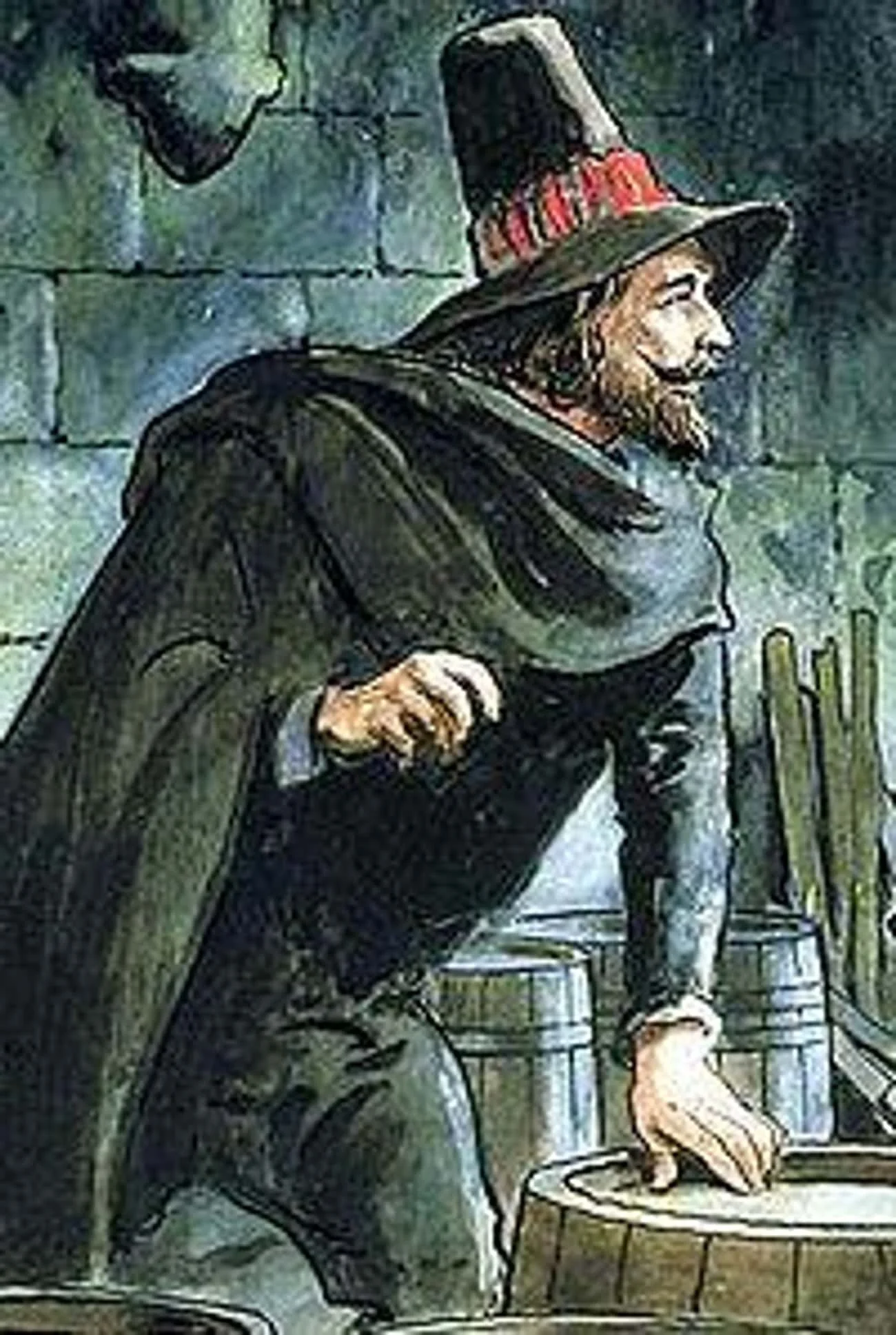
Bonfire Night commemorates the foiling of a plot to blow up the Houses of Parliament in 1605. Conceived and led by Robert Catesby, the conspiracy involved a group of disaffected Catholics who, angered by religious persecution, hoped to kill King James I and those assembled for the opening of Parliament. Guy Fawkes, an experienced soldier entrusted with guarding and igniting the gunpowder, was discovered beneath the House of Lords and arrested.
Catesby and several of his fellow conspirators fled to the Midlands, where they were eventually captured or killed. Eight surviving plotters, including Fawkes, were subsequently sentenced to be hanged, drawn and quartered.
This gruesome punishment involved being dragged to the execution site behind a horse, hanged until almost dead, then cut down, castrated and disembowelled. Finally, the condemned were beheaded and their bodies divided into four parts, which could be publicly displayed as a warning to other potential traitors. Fawkes, however, broke his neck during the hanging and was already dead before the remaining mutilations were carried out.
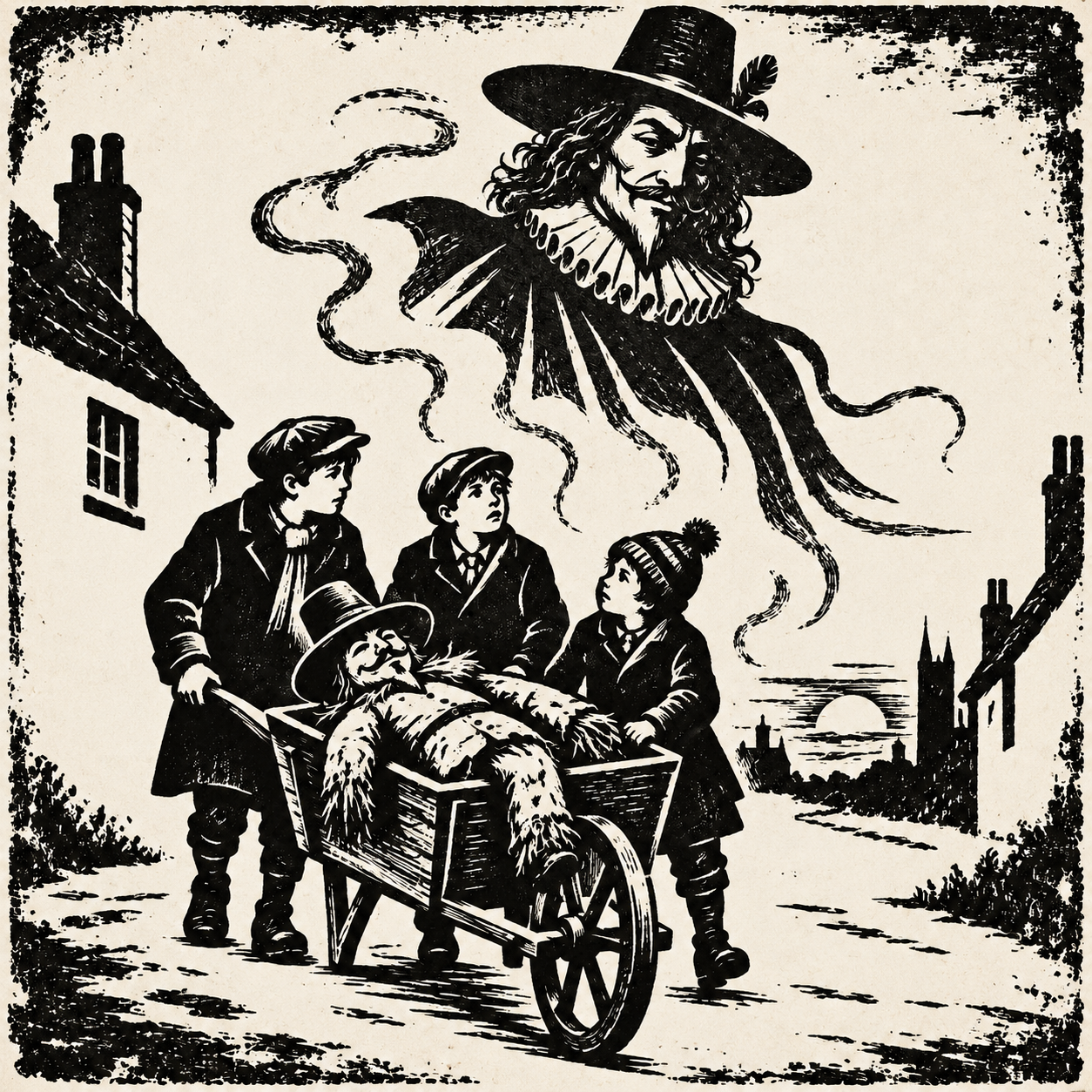
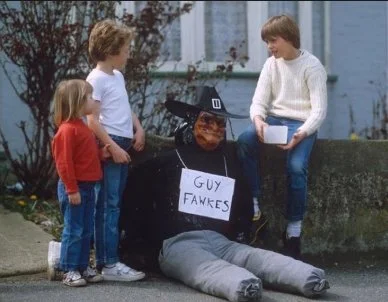
In years gone by—indeed, in the days of my own youth—children would create an effigy of Guy Fawkes by stuffing old clothes with straw, newspaper or rags. They would push this raggedy fellow about the streets in a wheelbarrow, crying, “Penny for the Guy!”
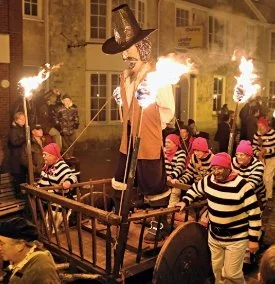
Passers-by would give the young scamps a little money, ostensibly so they could buy fireworks. It was a different age then! Finally, on the big night, the guy would be thrown onto the bonfire to be mocked and burned, while people gathered around the flames with hot potatoes, toffee apples and warm drinks to enjoy the celebrations.
Sadly, the making of Guys seems far less common these days, possibly because the excitement surrounding Halloween has grown, and trick or treating has taken over the old ‘Penny for a Guy’ custom. Nevertheless, the fireworks, bonfires and toffee apples remain.
As you might expect, ghost stories have gathered around the Gunpowder Plot. I have previously had cause to speak of the horrors of Holbeche House in the West Midlands, where Catesby and several of his companions made their last stand against the authorities, and the spectral marks this has left on the building and the surrounding area.
But today I wish to tell you of the ghost of Guy Fawkes. His spectre has been linked with more than one location, making him a fairly busy spook.
Our first stop is Ashby St Ledgers Manor in Northamptonshire, the ancestral home of the Catesby family. Above its gatehouse is a chamber known as the Plot Room, traditionally associated with the conspirators’ secret meetings.
Guy Fawkes is said to have enjoyed walking along the property’s terrace in the evenings during his stay, before riding off to meet his ultimate fate in London. And, if the tales are to be believed, his shadowy ghost still walks there on certain evenings.
Next we come to Scotton Old Hall, near Knaresborough in North Yorkshire. Fawkes spent part of his youth in Scotton, and family connections link him with the hall. Later folklore places his ghost within its rooms.
One account, dating from 1905, describes footsteps on a landing at night and the sound of a banging door. Intriguingly, not everyone attributed these disturbances to Fawkes alone, though quite who else is supposed to haunt the manor remains far from settled. Nevertheless, unexplained footsteps echoing through a sleeping house, when no one should be stirring, are unsettling enough, whoever—or whatever—might be responsible for them.
Finally, we have the Guy Fawkes Inn in York, opposite St Michael le Belfrey, the church where Fawkes was baptised in April 1570.
The inn has its own collection of ghost stories, and Fawkes is sometimes suggested as one of its spectral residents. In a recent interview, a director of the business said that a couple of guests over the years had felt a presence in the old bedrooms.
Whether that presence was the ethereal remnant of the famous Gunpowder Plot conspirator, some other phantom of unknown origin, or something with an entirely ordinary explanation is hard to say!
Thank you for taking the time to read my blog. If you enjoy tales of the strange and the unknown, please consider exploring my horror trilogy, The Wendlelow Mysteries. It tells the story of a haunted town and the people—and things—that call it home, unfolding across twenty-seven interconnected stories that reveal both the town’s origins and its ultimate fate.
So grab a copy of the first book in the series, Fireside Horror, and begin your journey into the strange and mysterious town of Wendlelow. Links to the books and audiobooks can be found in the Book Shop section of this website.
Until next time, my friend.
Stay Spooky.
click hear to visit The Book Shop.
Sources
Wikipedia
www.britannica.com/biography/Guy-Fawkes
www.haunted-houses.co.uk/guy-fawkess-ghost-remember-remember-the-5th-of-november/