Sawney Bean and the Cave of Horrors: A Chilling Scottish Folklore Tale
Scotland is a wonderful country; a place of great natural beauty, rich history, and warm, welcoming people. So it is with great sadness that I lead you down today's path, a journey that will take us to the darker corners of this remarkable land and introduce us to a figure whose story is drenched in blood, and whose exploits would sicken even the most jaded horror enthusiast.
Our tale takes us to the small town of Girvan on the Ayrshire coast, and to the lair of the region's most notorious killer, Sawney Bean.
The tale of Alexander "Sawney" Bean (sometimes known as Sandy Bane) is set in the sixteenth century. He was born in East Lothian, the son of a ditch digger, and though his father tried his hardest to guide his son into this humble but important trade, young Sawney had little interest in honest work. His interests were of a much darker kind.
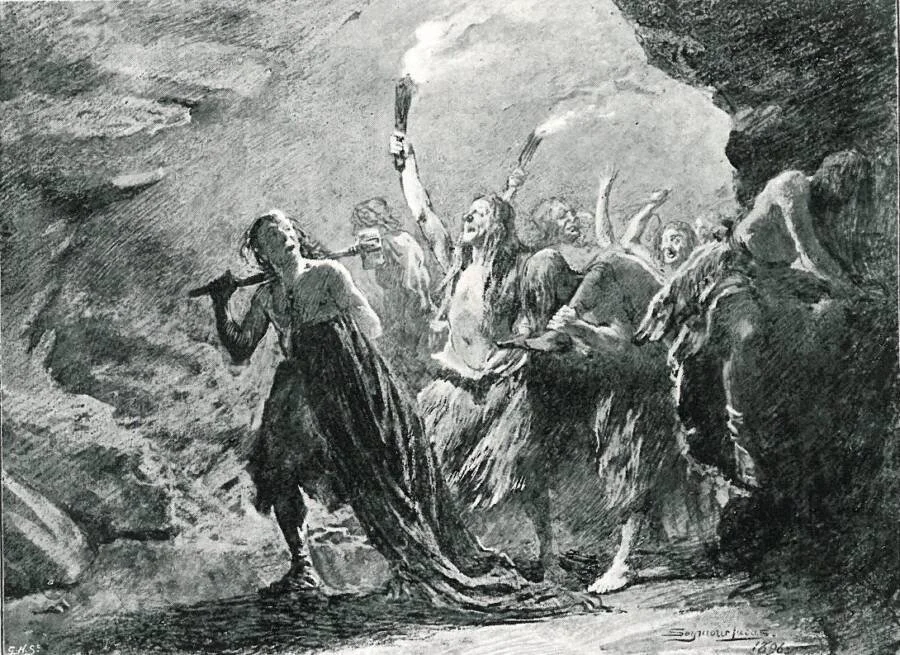
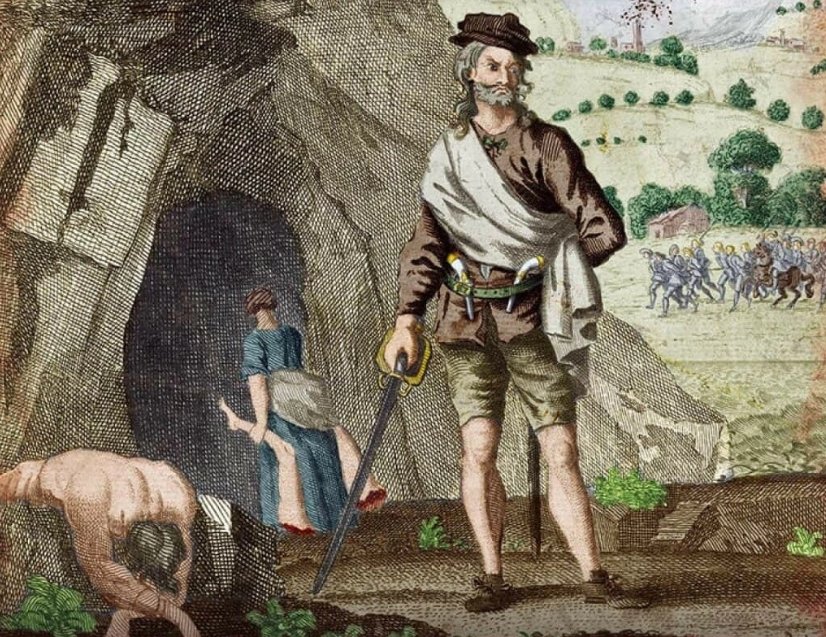
He left home with a woman named "Black" Agnes Douglas, she had a vicious reputation and was said to have been branded a witch. For a while, they journeyed across the land, robbing unfortunate travellers. But theft was the lesser of their crimes, for these two had other terrible plans for their victims. It is with some regret that I must tell you that, according to legend, they were cannibals, and their bloody appetite was insatiable.
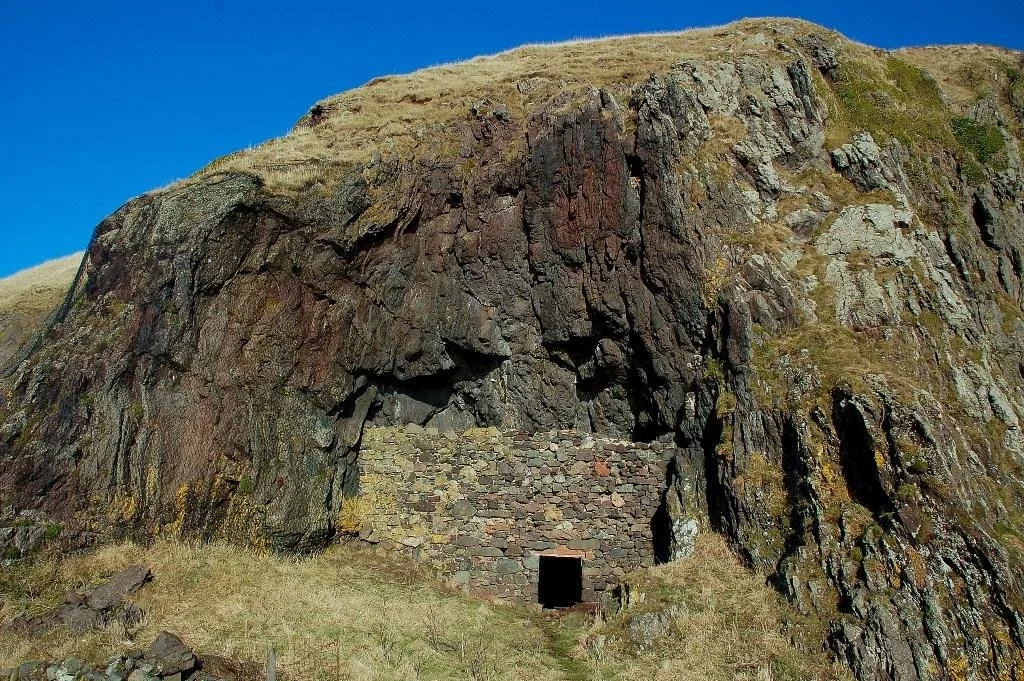
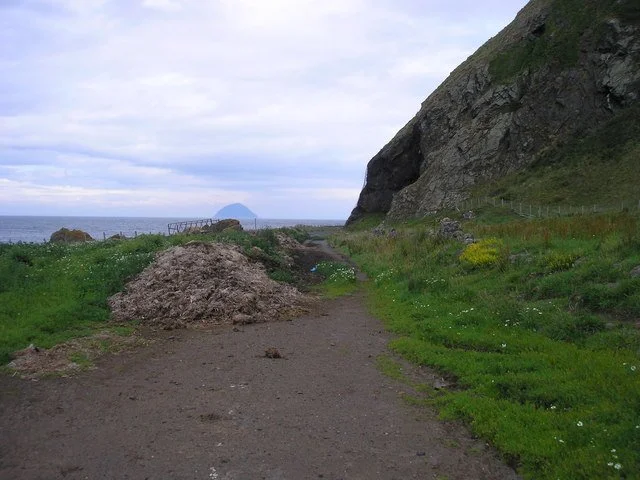
After a time, they made their home in a coastal cave at Bennane Head, between Girvan and Ballantrae. The cave was said to extend some 200 metres into the cliffs, and at high tide its entrance was almost completely cut off. They never announced their presence, and because of the isolated position of their bloody den they remained undetected for twenty-five years.
During this time, they are said to have produced six daughters and eight sons, along with fourteen granddaughters and eighteen grandsons. According to the legend, the grandchildren were the products of incestuous unions between the Bean children.
This large clan continued its trade of robbery and its practice of cannibalism, I suppose it is important to keep up one's hobbies. They would bring the bodies back to their cave, feast upon them, pickle those parts they did not immediately consume, and then discard the inedible remains by casting them into the sea in barrels.
Naturally, this wave of murder and robbery did not go unnoticed by the more observant members of the local population, and searches of the surrounding area were undertaken. One man even discovered the cave itself, but assumed it was uninhabitable because of its position and so made no attempt to explore it.
Suspicion for the crimes often fell upon others, including local innkeepers, and several innocent people were reportedly executed. Thus, the Beans continued their bloody trade undetected, but such a reign of terror could not continue forever.
One night, the clan attacked a newly married couple as they made their way home from a local fair. The husband was armed with both sword and pistol and was a capable fighter. Though his poor wife was captured and taken away to her terrible fate, he managed to hold off his attackers long enough for a large group of fairgoers to arrive and rescue him.
The Beans' existence had finally been revealed.
Upon learning of the murderous clan, King James VI of Scotland reportedly brought four hundred armed men to search the region. Royal bloodhounds eventually led them to the cave, where the clan was arrested and taken away.
Having thoroughly de-Beaned the cave, the royal force was horrified by what they discovered. Human remains hung from the walls, barrels were filled with severed limbs, and piles of stolen treasure lay scattered throughout the cavern.
The entire clan was executed. Black Agnes, along with her daughters and granddaughters, was forced to watch the menfolk being hung, drawn and quartered. Afterwards, according to the tale, the women were burned alive at the stake.
And so concludes the sorry tale of Sawney Bean and his clan.
But is there any truth to this gruesome story?
Historians have found no official records relating to Sawney Bean, nor any contemporary accounts of his crimes or execution. Most versions of the tale appear in much later crime publications, such as The Newgate Calendar during the eighteenth century. Some scholars have suggested that the story may be exaggerated folklore or even anti-Scottish propaganda.
Let us hope that is true.
Let us hope that Sawney Bean is merely a tall tale, a bogeyman used to frighten travellers on lonely roads, for the alternative says far too much about mankind's capacity for violence and depravity, and hardly bears thinking about.
I do hope you did not find this story too disturbing, dear reader.
I am excited to announce the release of the final book in The Wendlelow Mysteries trilogy, A Crow's Scream. It marks the conclusion of this particular series, a trilogy told through twenty-seven interconnected short stories that chronicle the history and eventual fate of the haunted town of Wendlelow and the people who call it home.
It has been a wonderful journey, and I would like to thank everyone who has joined me along the way. Your support, encouragement, and kind words have meant more than I can say.
Fear not, however, for there are still many dark tales waiting to be told. There will be more horror of a distinctly folky kind, more mysteries to unravel, more revelations to uncover, and, of course, more things lurking in the shadows.
For now, I hope you enjoy this final visit to Wendlelow and the strange, haunted world that has grown around it.
Stay Spooky.