The Banshee: Ireland's Wailing Spirit and Harbinger of Death
There is a very ancient legend in Ireland, one found in Lebor Gabála Érenn, a medieval Irish text. It records the arrival of the Milesians, or Sons of Míl, on the shores of Ireland many centuries ago. They are believed to be the true ancestors of the Irish people: Gaels who sailed from Iberia in search of a land to call their home.
When they first made landfall on the Emerald Isle, they encountered the Tuatha Dé Danann, a supernatural race who had long dwelt there. An agreement was reached between the two peoples: the Tuatha Dé Danann would live in the world below, whilst the Sons of Míl would occupy the world above.
But the Milesians may have brought something with them across the ocean. Spirit, curse, or warning, it was known in Irish as the bean sí. Today, however, it is better known by another name: the Banshee.
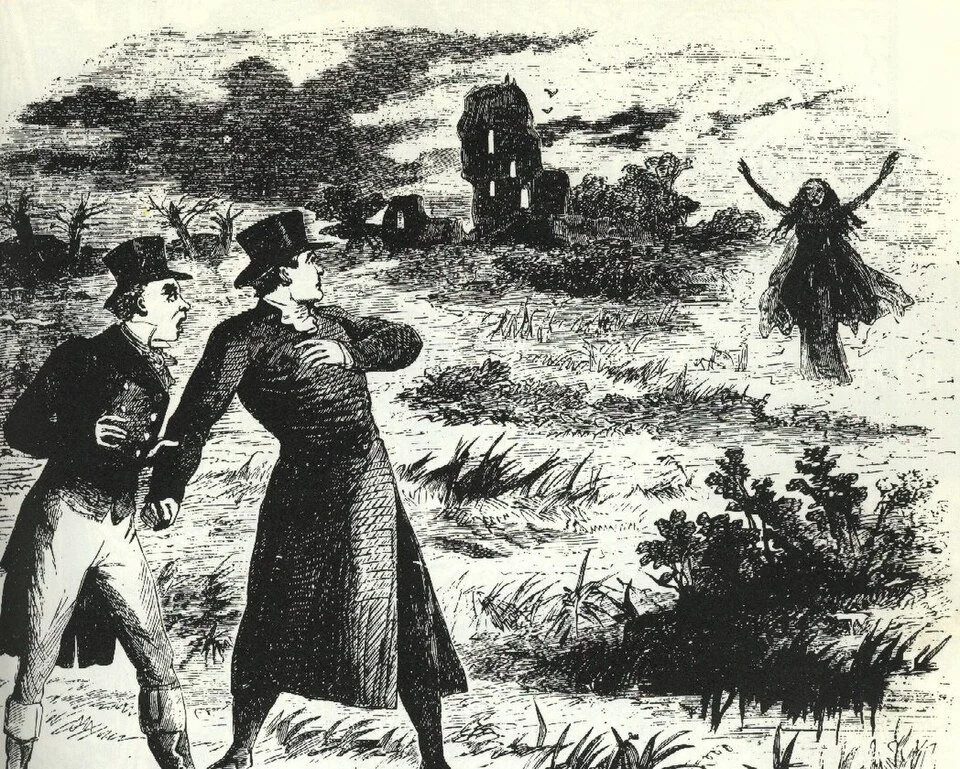
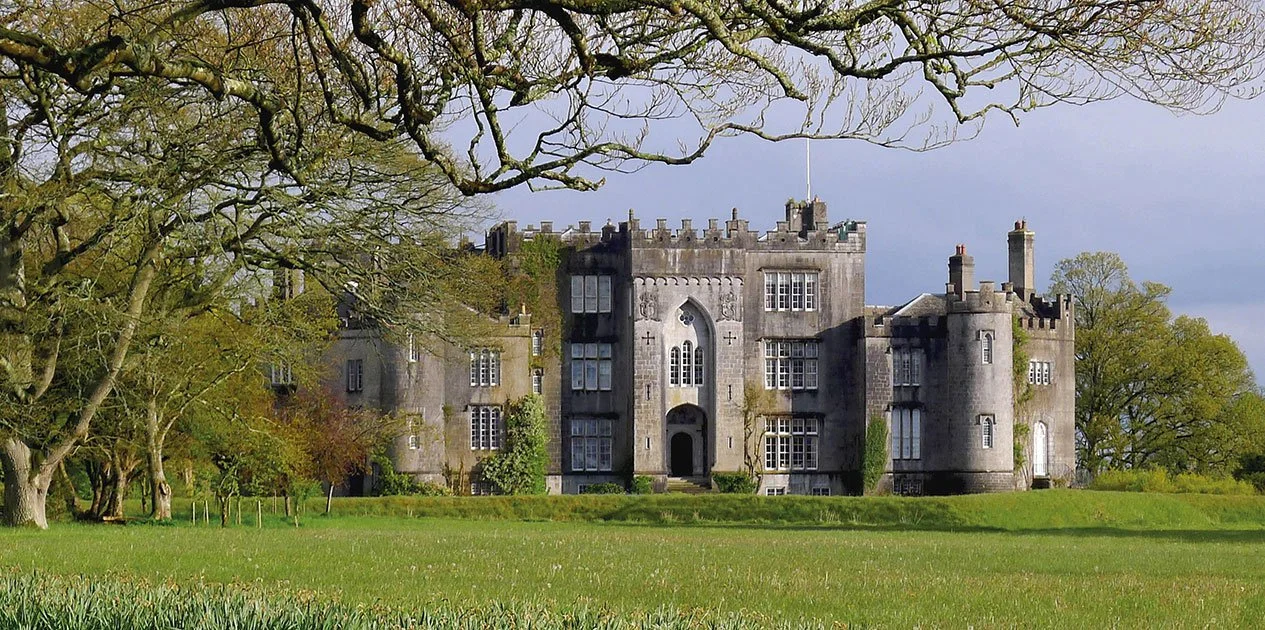

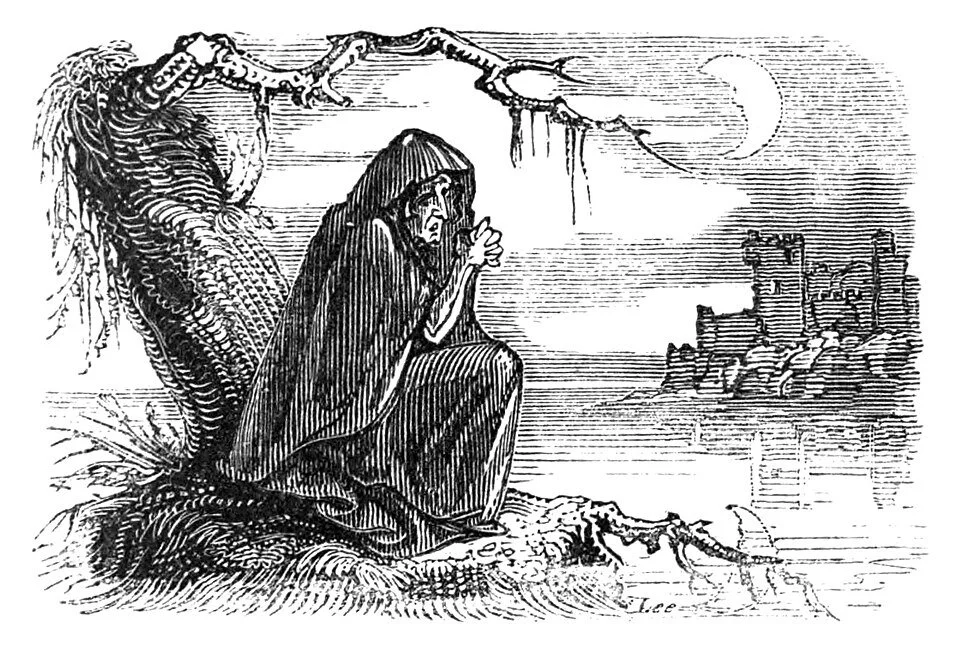
The Banshee is a fairy woman, a spirit said to lament the death of any man or woman descended from the original Milesian settlers. She is not particularly evil; rather, to hear her cry is a sign that a member of that ancient line will soon pass away.
In parts of Ireland there was a tradition called keening, which formed part of the mourning process. Usually performed by a woman, it involved weeping whilst singing a lament for the departed. In regions where the practice was especially common, some women even took on the role of professional keeners.
A Banshee can therefore be seen as a high-status keener: a fairy woman sent to mourn an impending death within one of Ireland's old families. It is often said that families bearing the Ó, O', Mac, or Mc prefix are the most likely to receive a nocturnal visit from this wailing spirit, though there are exceptions to the lore. For example, a Banshee may also mourn a person gifted in music or song.
The Banshee is usually described as a woman, often elderly, with flowing robes and long hair. Her eyes are perpetually red from endless weeping. She is frequently depicted wearing grey, though some witnesses claim she is clad in green.
Lady Jane Wilde, the mother of Oscar Wilde, provided the following description of the entity:
The size of the banshee is another physical feature that differs between regional accounts. Though some accounts of her standing unnaturally tall are recorded, the majority of tales that describe her height state the banshee's stature as short, anywhere between one foot and four feet. Her exceptional shortness often goes alongside the description of her as an old woman, though it may also be intended to emphasise her state as a fairy creature.
Sometimes the banshee assumes the form of some sweet-singing virgin of the family who died young, and has been given the mission by the invisible powers to become the harbinger of coming doom to her mortal kindred. Or she may be seen at night as a shrouded woman, crouched beneath the trees, lamenting with a veiled face; or flying past in the moonlight, crying bitterly; and the cry of this spirit is mournful beyond all other sounds on earth, and betokens certain death to some member of the family whenever it is heard in the silence of the night.
A famous example of a Banshee visitation is that of the Bunworth Banshee. Reverend Charles Bunworth lived in the south of Ireland, and many people reported hearing the mournful keening of the supernatural spirit in the week leading up to his death.
Most notably, a herdsman claimed that he and several others heard the cry of the Banshee in the days before the reverend's passing. On the night of his death, an elderly woman who had been sitting at his bedside reported hearing a strange moaning sound. It seemed, she said, "as if whoever was making it was holding their mouth close to the window".
She hurried to alert other members of the household. Two men, highly sceptical of the claims, rushed outside to investigate. The sound ceased immediately, and despite a thorough search of the grounds, no source could be found. Strangely, when they returned indoors, they were informed that whilst they had been outside the noise had intensified considerably.
I am sad to say that Reverend Bunworth did not live to see the morning.
And so, a warning to anyone of Irish descent, and indeed to those gifted in music or song. Beware the wailing of the wind at your window in the dead of night. You never know — it might be something far more unnatural.
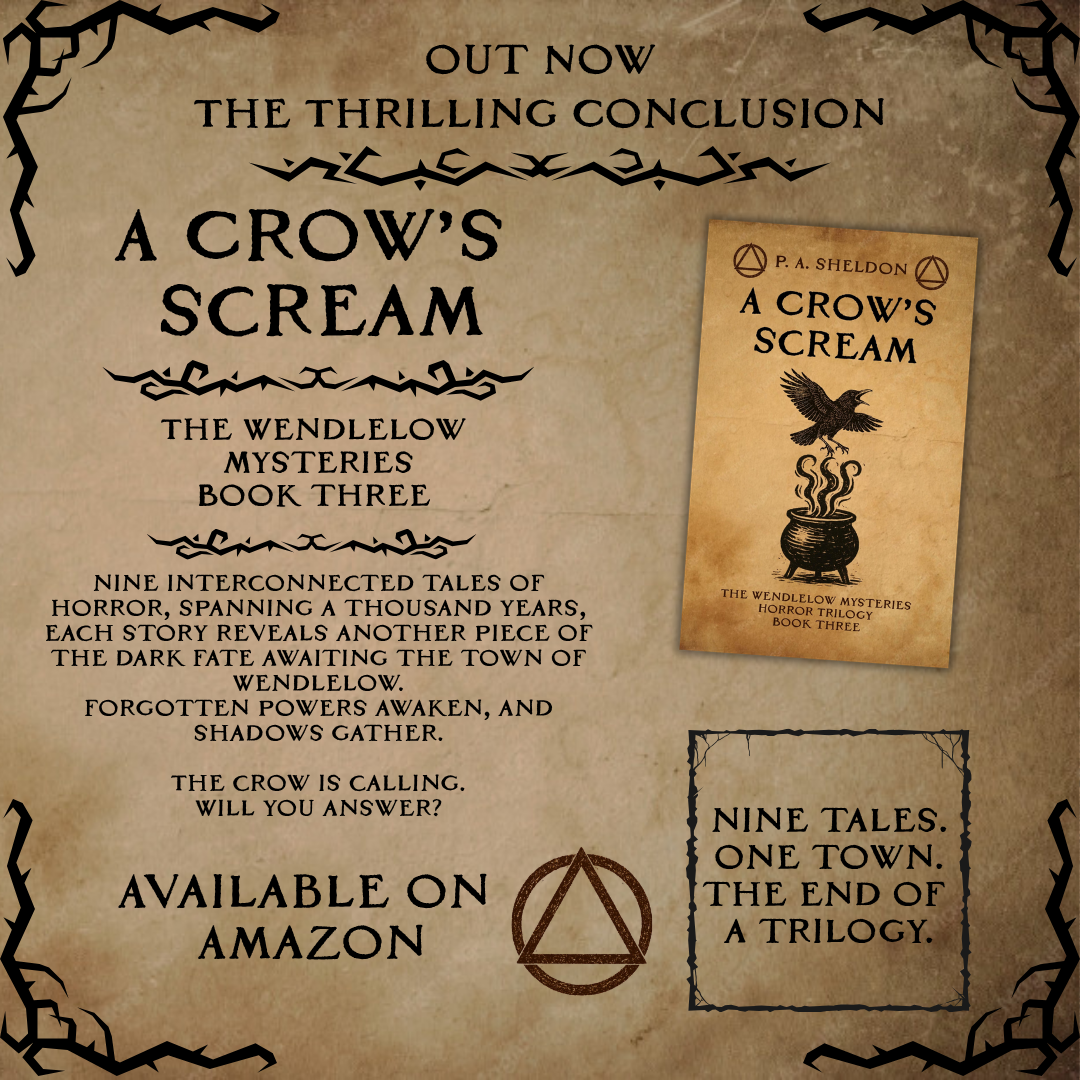
Some exciting news, dear reader. The final book in The Wendlelow Mysteries trilogy, A Crow’s Scream, has now been released in the US (link below) and is due to arrive on all other Amazon platforms over the next few days.
This marks the conclusion of this particular series of books. It has been a wonderful journey, and I would like to thank everyone who has joined me along the way. Your support, encouragement, and kind words have meant more than I can say.
Fear not, however, for there are still many dark tales waiting to be told. There will be more horror of a distinctly folky kind, more mysteries to unravel, more revelations to uncover, and, of course, more things lurking in the shadows.
For now, I hope you enjoy this final visit to Wendlelow and the strange, haunted world that has grown around it.
As always, thank you for reading.
Stay spooky.