The Terrifying Legend of Krampus: Alpine Christmas Folklore Explained
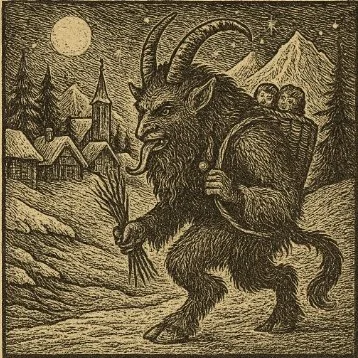
Krampus, about his sinister business.
By the time the 5th of December arrives, children throughout the world are dreaming of brightly wrapped presents left in stockings or nestled beneath the gently glowing Christmas tree. But for the children of the Alpine region of Europe, this time was not one to be celebrated; it was a night to be feared, for the 5th of December is Krampusnacht (Krampus Night).
Krampus was largely unknown outside the Germanic/Alpine countries until around December 2014, when Austrian-German actor Christoph Waltz spoke about him during an interview on American television. Since then, his popularity - or perhaps I should say infamy - has spread rapidly.
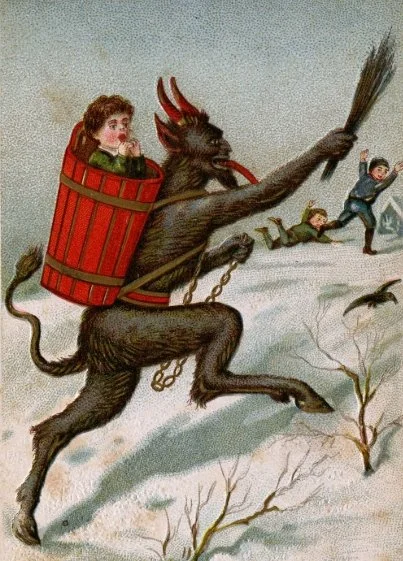
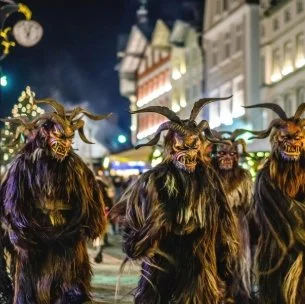
Krampus’s name derives from the German word Krampen, meaning claw. He is described as a monstrous, half-goat, half-demon creature with a lolling red tongue, often depicted as being covered in thick hair. He wears a basket upon his back - a place to imprison any naughty children he manages to seize, for this Yule terror is an abductor of the young.
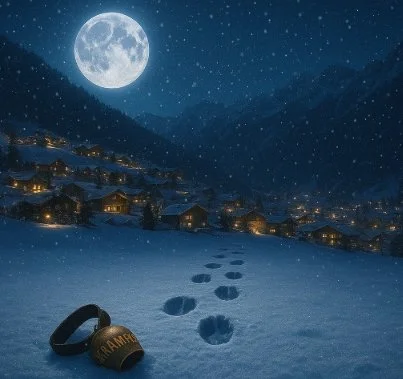
In his hands, he bears a Ruten, a bundle of birch sticks which he uses to swat and punish wrongdoers. He wears heavy chains, which he rattles loudly to announce his approach to terrified villagers; these chains are believed to symbolise the binding of the Devil in Christian tradition. Large cowbells are tied to his waist - another means by which he can be heard before he is seen. His equipment can vary slightly from region to region, and sometimes he is shown carrying a pitchfork.
Krampus is the devilish companion of St Nicholas, but where jolly old St Nicholas rewards the good, this hunched, leering devil punishes the bad, carrying off ne’er-do-well nippers in his basket. The ultimate fate of these miserable little lads and lasses depends upon the region. Usually, he will dish out a good beating with his Ruten, and children will awaken the following morning nursing welts and bruises. But those pint-sized wrongdoers may count themselves lucky, for the truly wicked are believed to be drowned, eaten, or even carried off to Hell.
Krampus is thought to have his origins in the ancient pagan rituals of the winter solstice. He is believed to be the son of Hel, the Norse god of the underworld, and despite the best efforts of the Catholic Church to ban him, he has survived through the centuries. It is quite possible that he is more popular now than he ever was before.
Festivals involving Krampus include the Krampuslauf (Krampus Run). Here, people parade through the winter streets dressed as the Alpine demon, terrifying spectators and even chasing them. The outfits of the participants are of excellent quality; the masks alone are often hand-carved and highly individualised, and very expensive to purchase. The parade is usually lit by torchlight, with strange, flickering shadows being thrown across the crowded streets.
During the late 20th century, in an effort to preserve cultural heritage, Krampus runs became increasingly popular. Today, Krampus is something of an icon, with many books and films about him. Some see the renewed popularity of Krampus as a backlash against the commercialisation of Christmas., and a return to something simpler that brings the community together.
I have often wanted to write my own Krampus story, but my commitments to completing the Wendlelow Mysteries trilogy have stayed my hand. However, with this project coming to an end, perhaps I shall find the time to turn my attentions to this horned menace, maybe I will have a Krampus tale ready to share with you my friend next Christmas.
So when you settle down to sleep this 5th of December, consider all the things you have done throughout the year. Have you been quite good enough? And remember - the jingling of bells does not always herald the arrival of Santa’s sleigh.
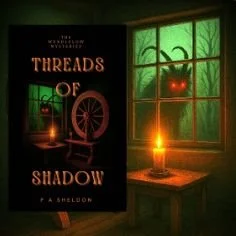
Thank you for taking the time to read my blog. I hope this little piece of Christmas folklore has given you a pleasing shudder. If you enjoy what I do, please consider picking up a copy of my new book, Threads of Shadow - link below.
Alternatively, there are plenty of free stories, written and audio, by yours truly, available in the download section of this website.
Until next week - stay spooky.