The Woodwose: The Wild Man of English Folklore
Throughout medieval England, one belief held strong. It can be seen carved into old wind-worn churches, woven into the tapestries of the nobility, and painted in the illuminated manuscripts produced by the monks who recorded the history of the age. A strange creature, hairy and often depicted with a club resting upon his shoulder, this figure was known as the Wild Man, or, as he is more commonly called today, the Woodwose.
The word Woodwose derives from the Middle English wodewose, itself descended from the Old English wudu-wāsa, meaning "woodland being" or "creature of the forest".
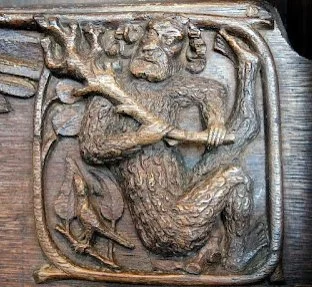
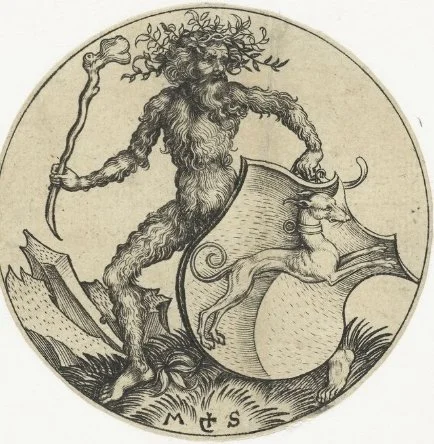
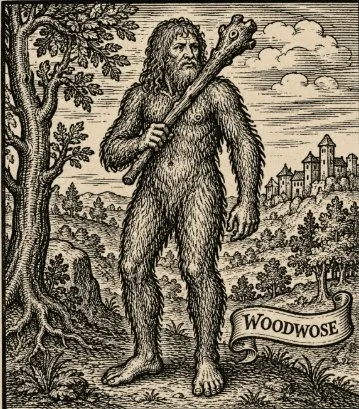
To be fair, the Woodwose is not unique to England. Variations of the legend can be found across mainland Europe. A Woodwose could vary in size from a dwarf-like figure to a gigantic being standing anywhere between seven and ten feet tall, covered in hair or moss and carrying a small tree as a club. They were usually said to be solitary creatures, although some medieval illustrations depict them living in small family groups.
So, what exactly was a Woodwose? Some people have interpreted these beings as men and women who fled society to live in the wild forests and lonely moorlands. Over time, their unkempt hair and ragged clothing may have given them a wild, almost animal-like appearance. Other scholars draw comparisons with the satyrs of Greek mythology, while some believe the Woodwose is simply the personification of the forest itself: untamed, unpredictable and forever beyond mankind's control.
According to local tradition, a terrifying Wild Man lived in the woods near Stainfield in the county of Lincolnshire, terrorising the surrounding countryside. A local knight, Francis Tyrwhitt, was promised an estate if he could slay the creature. It is said that the brave knight found the Wild Man asleep beside a pit after the cries of disturbed plovers alerted him to its presence. He killed the creature, and the Wild Man subsequently became part of the Tyrwhitt family's crest. Although the story was first recorded in the early twentieth century by the Rev. James Alpas Penny, it almost certainly preserves a much older local tradition.
Available on Amazon and Audible.
Another famous Wild Man tale comes from the twelfth-century chronicles of Orford in Suffolk. Here, fishermen discovered a hirsute, wild-looking man trapped in their nets. According to contemporary accounts, he possessed enormous strength but was incapable of human speech, although he appeared to understand human behaviour. Chroniclers noted that he was strongly drawn to water and repeatedly attempted to escape back to the sea. He was imprisoned in Orford Castle for several months, fed on a diet of raw fish, and eventually released, whereupon he disappeared into the sea and was never seen again.
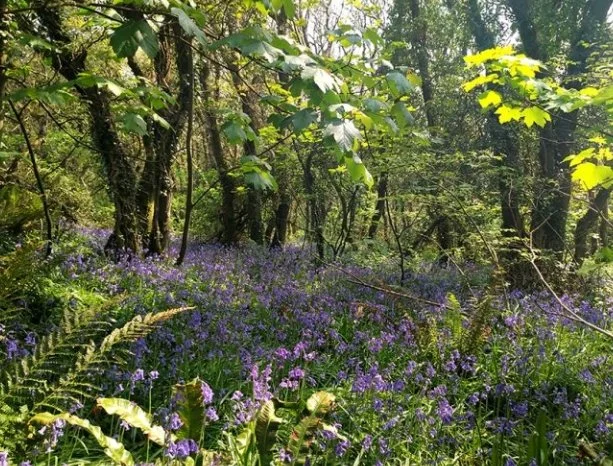
There is also a much more modern account of an encounter with what many believe to have been a Woodwose. In the year 2000, a man employed on a rural Cornish farm making bird cages for pheasant shoots claimed that, while working alone, he repeatedly heard strange noises coming from the nearby woods at St Mawgan. There were knocks, rustling sounds, clicking noises and eerie whistles. Then, one day, as he stood waiting near the edge of the woodland, he noticed a leathery face watching him from the undergrowth. Whatever it was slowly rose to its full height. He described it as over six feet tall, naked and covered in a thick mass of copper-coloured hair.
Understandably shaken, the man told his employer what he had seen. According to the account, the farmer responded in a calm, matter-of-fact manner:
"They call them Woodwoses. Best to leave them alone."
Reports of such encounters continue even today. One allegedly occurred not far from where I am sitting as I write this. While walking in the woods on the ridge above the Himley Hall estate in Staffordshire, an elderly couple claimed to have seen a large, hairy figure following them through the trees. They said it watched them from behind the trunk of an old tree before disappearing into the woodland. Unsurprisingly, the experience left them badly shaken.
So, what are we to make of these stories? Is the Woodwose some British equivalent of Bigfoot, a remnant population of prehistoric beings eking out an existence on the very fringes of civilisation? If so, how could such creatures remain hidden in a country as densely populated as Britain?
Or are these sightings simply glimpses of reclusive men and women who have abandoned modern society to live in the wilderness, their appearance transformed by years of isolation?
Or, perhaps, the truth is stranger still...
Thank you for taking the time to read my blog, dear friend. If you enjoy a frightening tale, why not try my horror trilogy, The Wendlelow Mysteries? The final, thrilling conclusion, A Crow’s Scream, has now been unleashed upon the world. It is available on Amazon links in shop section of this website.
Stay spooky

Available on Amazon and Audible.