Folk Hero – Johnnie Armstrong & the Restless Spirits of Gilnockie Tower
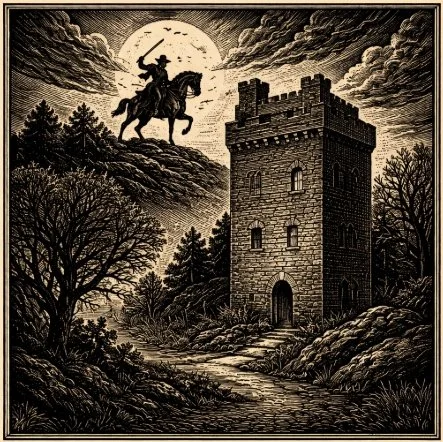
Johnnie Armstrong, notorious villain or folk-hero?
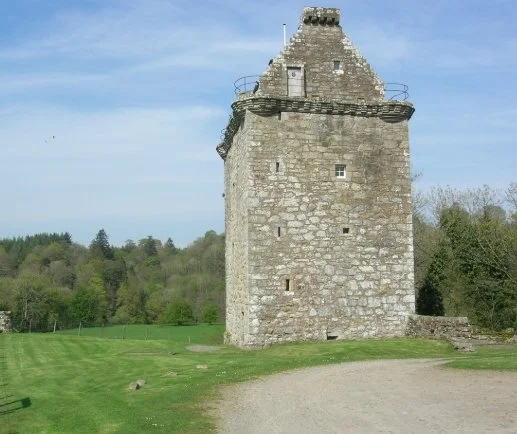
Just north of the village of Canonbie, in Dumfriesshire in south-west Scotland, stands an old fortified tower. The present structure largely dates from the early seventeenth century, although an earlier tower is believed to have stood on the site. Originally known as Hollows Tower, it is today called Gilnockie Tower.
The name Gilnockie is thought to derive from the Scottish Gaelic Geal Cnocan, meaning “little white hill”. The tower is traditionally associated with Johnnie Armstrong, a notorious Border reiver who later became a folk hero.
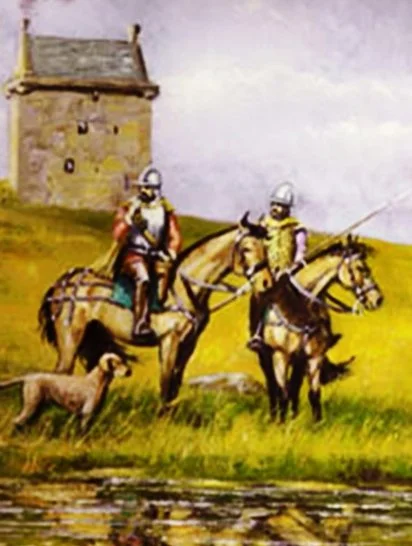
Armstrong was a clan leader followed by around one hundred and fifty men. He raided both English and Scottish lands, shifting his allegiance according to which crown held the upper hand. Operating with relative impunity from his base at Gilnockie, and under the protection of Lord Robert Maxwell, Armstrong even raided and burned the town of Netherby in Cumberland in 1527.
By 1530 the Borderlands had become so volatile that James V personally led a campaign to impose royal authority. The King offered to meet Armstrong, who, believing he would receive a royal safe conduct, agreed to meet him face to face at Carlenrig Chapel, accompanied by about thirty followers.
He was deceived.
Instead of receiving a pardon, Armstrong and his men were seized by the King’s much larger force and hanged without trial. The execution was intended as a stark warning to other reivers and an attempt to restore law and order to the Borders. It did not have the desired effect.
Because the King had effectively lured Armstrong under a supposed assurance of safety, many viewed the act as treacherous. In death, Armstrong’s reputation began to change. Whatever he may have been in life — arguably little more than a violent outlaw — he became something more in legend. A traditional ballad, Johnie Armstrang, commemorated his fate, and he later appeared in the writings of Walter Scott. In these and other accounts he is portrayed as well dressed and charismatic, loyal to his men, and unjustly executed. Some later interpretations even cast him as a defender of Scottish independence rather than a self-interested raider.
Modern historians tend to regard Armstrong as both a criminal and a casualty of shifting political authority in a lawless frontier society.
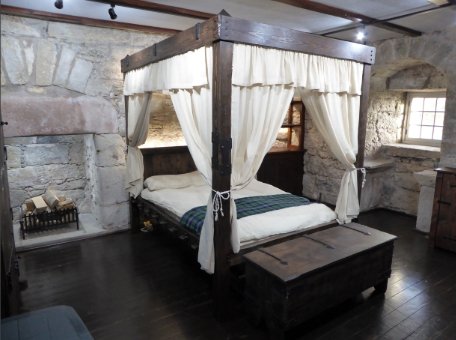
Gilnockie Tower itself fell into ruin for a time but has since been restored. It now stands as a monument to Border history and continues to attract visitors.
The tower remains open to the public and is well worth a visit. Local tradition attaches several curious tales to the place. Stories tell of the phantoms of a family of three and their loyal hunting dog, said to be heard moving about the building at night. There is also the mysterious “yin leggit” ghost — a one-legged apparition glimpsed on cold, foggy evenings. Visitors have reported footsteps on empty staircases, faint voices drifting through the tower, and the unsettling sensation of being watched.
Could any of those whispers belong to Johnnie Armstrong himself? Might the old reiver return to his former stronghold from time to time? And if he does, what would he make of it now?
Who can say?
Thank you for taking the time to read my blog. If you enjoyed this piece of border folklore, please consider picking up a copy of my new book, Threads of Shadow - chock-full of phantoms and monsters, their stories entwined in a novel guaranteed to send a shiver down your spine - available worldwide on Amazon. Search P A Sheldon. or click the link below.
Alternatively, you’ll find plenty of free stories, written by yours truly, available in the download section of this website.
Until next week — stay spooky.