Llamhigyn y Dŵr – The Dreaded Water Leaper
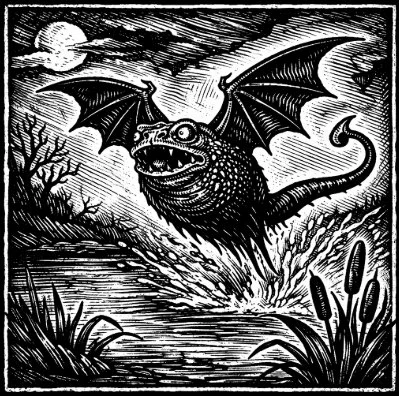
Llamhigyn y Dŵr – The Water leaper
Wales is a country famous for its mountains and deep valleys - a place of vivid beauty in which a person can truly lose themselves. Yet these mountains and valleys also contain lakes, rivers and ponds, and some of these waters were long regarded with suspicion. They were thought to be the domains of black-hearted devils, terrifying spectres and dangerous beasts.
Dangerous beasts such as the Llamhigyn y Dŵr.
In Welsh, Llamhigyn y Dŵr (pronounced Hlam-HIG-in uh DOOR) literally means “Water Leaper”. It is said to resemble a large and monstrous toad, limbless except for membranous, bat-like wings which it uses to glide when it springs from the water at its prey. It possesses a long tail tipped with a cruel, venomous-looking stinger.
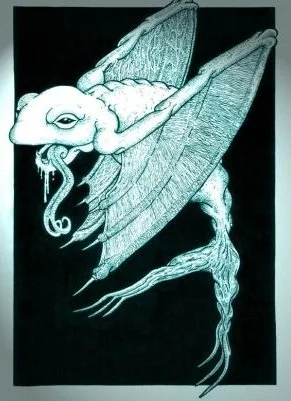
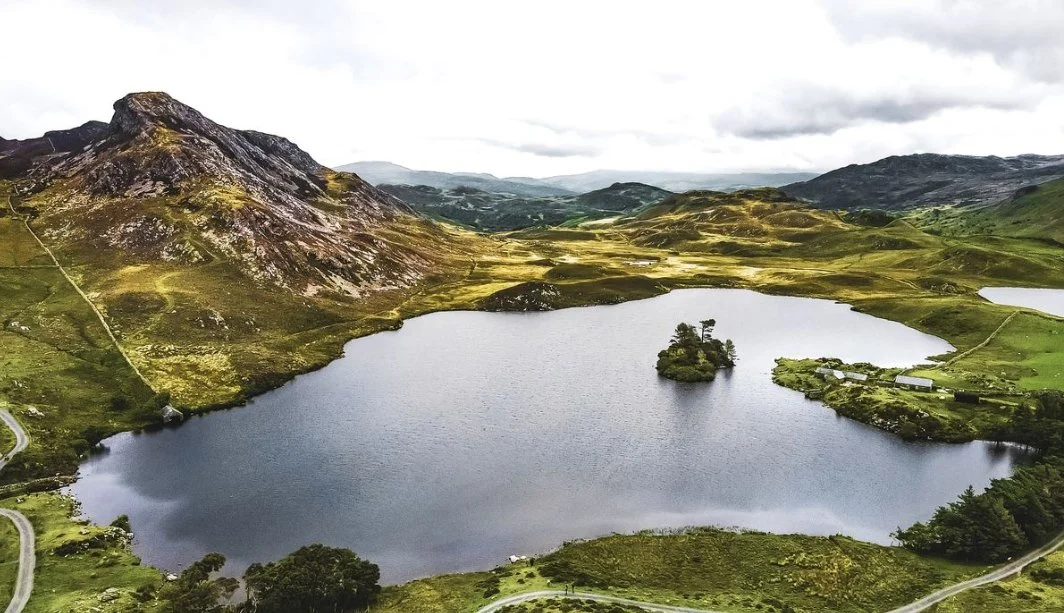
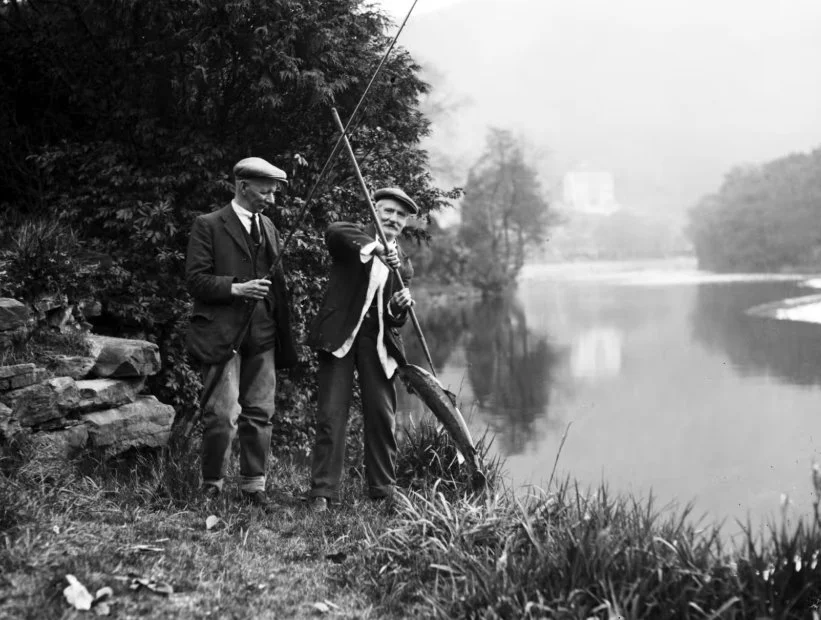
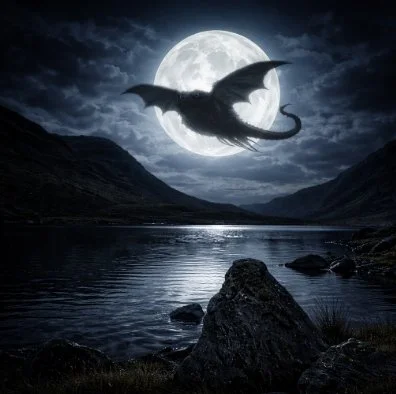
It hunts by hiding in murky water, waiting for a victim to venture too close. Then it erupts from the depths and launches itself at the unsuspecting unfortunate. Shepherds are careful not to let their flocks or dogs stray too near lakes where these froggish fiends are believed to lurk. Anglers returning home with rod and tackle after an unsuccessful day at the water know precisely what is to blame for their empty creels.
The scholar of Welsh language and lore, Sir John Rhys (1840–1915), relates a tale in his book Celtic Folklore: Welsh and Manx (Clarendon Press, London, 1901), which he says was told to him by a fisherman named Old Ifan Owen. Ifan claimed that he himself had once run into this amphibious wrong ’un, and that his father had encountered the creature on many occasions. His recorded account is given below:
Once in particular, when he had been angling for hours towards the close of the day without catching anything, he found that something took the fly clean off the hook each time he cast it. After moving from one spot to another on the lake, he fished opposite the Benlan Wen, when something gave his line a frightful pull, “and, by the gallows, I gave another pull,” the fisherman used to say, “with all the force of my arm: out it came, and up it went off the hook, whilst I turned round to see, as it dashed so against the cliff of Benlan that it blazed like lightning.” He would add, “If that was not the Llamhigyn, it must have been the very devil himself.” That cliff must be two hundred yards at least from the shore.
As to his father, he had seen the Water Spirit many times, and had also been fishing in the Llyn Glâs or Ffynnon Lâs when he hooked a wonderful and fearful monster. It was not like a fish, but rather resembled a toad, except that it had a tail and wings instead of legs. He pulled it easily enough towards the shore, but as its head rose from the water it gave a terrible shriek - enough to split the fisherman’s bones to the marrow. Had there not been a friend standing by, he might have fallen headlong into the lake and been dragged under like a sheep; for there was a tradition that if a sheep entered the Llyn Glâs, it could never be recovered, as something would at once drag it to the bottom.
Rhys adds that this was the belief of the shepherds of Cwm Dyli within his memory, and that they acted upon it by never allowing their dogs to pursue sheep too close to the lake.
I could find no firm accounts of this bat-winged Batrachian attacking people outright. Nevertheless, owners of dogs and sheep might be wise to beware, lest a beloved pet or valuable livestock become its next meal.
So is this croaking menace real - an ever-present danger to Welsh dog walkers - or merely a tall tale, a convenient excuse offered by anglers in the warmth of the pub after a long day on the water, explaining why today’s catch slipped away?
I shall leave you, dear reader, to judge.
Thank you for taking the time to read my blog. I hope you have liked this monstrous Welsh legend.
If you enjoy my work, please consider picking up a copy of Threads of Shadow or Fireside Horror - folkloric horror collections told through short stories, available on Amazon stores worldwide. Links to the UK and US editions are below.
Until next week -
Stay spooky.
Sharon Joy Reads
“Exceptional folkloric horror”
★★★★★
Sources
Wikipedia
abookofcreatures.com
Celtic Folklore: Welsh and Manx (Sir John Rhys, 1901)
An Encyclopedia of Fairies (Katherine Briggs)